Comprehensive Pact with Sector-Wide Gains
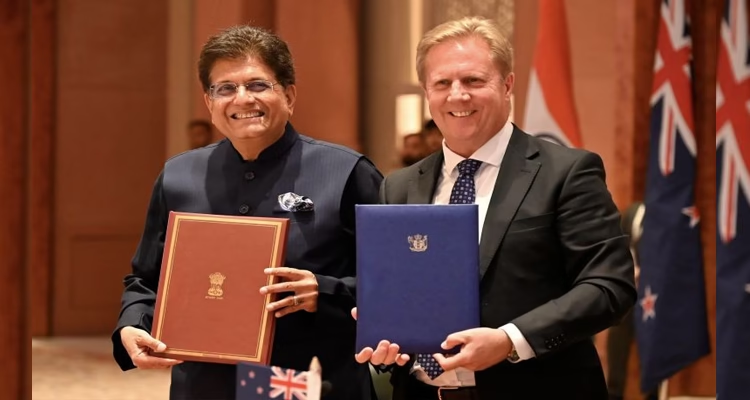
According to an official statement by the Government of India, the FTA is designed as a comprehensive framework covering market access, agricultural productivity, investment flows, talent mobility, and cooperation in sectors such as sports, tourism, and people-to-people exchanges. The agreement aims to deliver broad-based benefits to manufacturers, farmers, MSMEs, women entrepreneurs, students, and skilled professionals in both India and New Zealand.
Agra’s Leather Industry Set for Global Leap
The deal is expected to significantly boost India’s leather and footwear sector, particularly in Agra—responsible for nearly 75% of the country’s leather footwear production and a key hub under the One District One Product scheme.
With tariffs on leather and footwear exports dropping from 5% to zero, Indian exporters are set to gain a sharp competitive edge. Industry stakeholders say the sector could scale up to $50 billion by 2030, driven by a transition towards high-value manufacturing.
Officials also pointed to strong complementarities between New Zealand’s raw leather resources and India’s manufacturing strength, with both sides exploring ways to position Agra as a global sourcing hub and major employment generator.
Pharma, AYUSH Get Regulatory Boost
The FTA also brings relief to India’s pharmaceutical and medical devices sectors by enabling faster regulatory clearances. Provisions for mutual recognition of GMP and GCP inspection reports from trusted international regulators are expected to reduce compliance hurdles and speed up product approvals.
Notably, the agreement includes a dedicated chapter on health and traditional medicine—marking the first formal recognition of AYUSH in a bilateral trade pact for both countries.
Education, Mobility and People-Centric Growth
Highlighting the agreement’s broader impact, Piyush Goyal underscored new opportunities for Indian students and professionals through enhanced mobility provisions.
Describing the FTA as “an opening of both doors and minds,” he urged industries to look beyond conventional sectors and tap emerging opportunities across pharmaceuticals, AYUSH, education, sports, tourism, and investment.
Goyal also called on industry bodies to ensure that the benefits of the agreement percolate to grassroots enterprises, especially MSMEs, reinforcing the pact’s vision of an inclusive, people-centric economic partnership.