Russia Test-Fires ‘Sarmat’ ICBM Nuclear Missile, Putin Calls It World’s Most Powerful
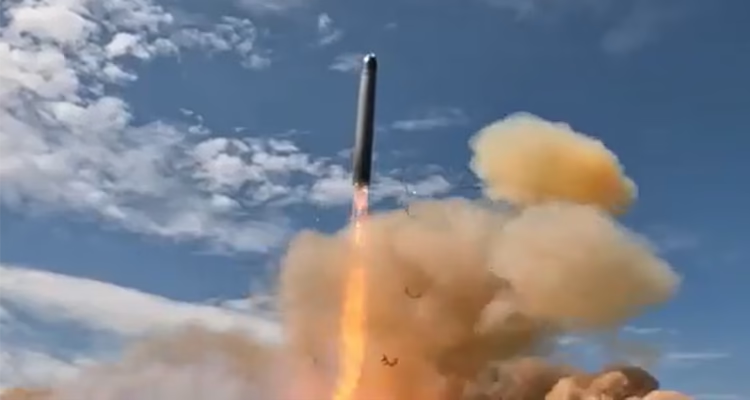
News Desk: Russia has carried out a successful test launch of its RS-28 Sarmat intercontinental ballistic missile (ICBM), a nuclear-capable weapon President Vladimir Putin described as one of the most powerful missile systems ever developed.
The Kremlin said Putin praised the launch as a major breakthrough for Russia’s strategic nuclear forces, claiming the Sarmat surpasses the Soviet-era Voevoda missile currently in service. Western defence analysts have often referred to the weapon as “Satan 2.”
200+ TON Sarmat missile ERUPTS into sky in massive fiery blast
Russia’s beast ICBM launches with unmatched 35,000 KM range
Multiple warheads screaming at HYPERSONIC speeds pic.twitter.com/K2qHUccwjw
— RT (@RT_com) May 12, 2026
According to Russian officials, the missile’s total destructive capability is believed to be more than four times stronger than comparable Western systems. Putin also claimed the Sarmat can travel along both ballistic and suborbital trajectories, allowing it to evade existing and future missile defence shields.
The Russian leader said the missile has a range exceeding 35,000 kilometres and is capable of carrying multiple nuclear warheads. Moscow plans to deploy the Sarmat for active combat duty later this year.
🚨⚡️ “PHYSICS OF DOOM”: Russia Unlocks SARMAT & Ends Western Defensive Dominance!
As Trump flies to Beijing and Iran stands firm, Putin resets the global order with the successful test of the SARMAT ICBM — THE MOST POWERFUL NUCLEAR WEAPON IN HUMAN HISTORY..
– Over 35,000 km… pic.twitter.com/Uzq9BYcsqf
— RussiaNews 🇷🇺 (@mog_russEN) May 12, 2026
What is the RS-28 Sarmat?
The RS-28 Sarmat is a silo-based heavy intercontinental ballistic missile developed to replace the ageing Soviet-era Voevoda system as part of Russia’s next-generation nuclear deterrence programme.
Russian defence officials say the missile features greater payload capacity, faster launch readiness, improved range, and advanced countermeasures designed to penetrate sophisticated air and missile defence systems.
One of its most significant capabilities is its Multiple Independently Targetable Reentry Vehicle (MIRV) technology, which allows several warheads to strike different targets simultaneously.
🇷🇺 On May 12, President #Putin received a report on the successful test of the Sarmat missile.
💬 With 35,000+ km range, enhanced accuracy & the ability to overcome all existing & future missile defence systems, Sarmat is a formidable deterrence asset.https://t.co/waBvSOHm7I pic.twitter.com/rBchrCce1r
— MFA Russia 🇷🇺 (@mfa_russia) May 12, 2026
Arms Race Concerns Intensify
The missile test comes after the expiration of the New START treaty — the last major nuclear arms control agreement between the United States and Russia that imposed limits on deployed strategic nuclear arsenals.
Security experts warn that the collapse of the treaty framework could accelerate a renewed global arms race and reduce transparency between the world’s two largest nuclear powers.
Military analyst and air defence historian Yuri Knutov said the Sarmat’s ability to use hypersonic manoeuvres and suborbital flight paths makes interception extremely difficult, even for advanced missile defence projects such as the proposed U.S. “Golden Dome” shield.
The latest test is being viewed as a strong geopolitical signal from Moscow amid escalating global tensions and growing military competition between Russia and the West.