
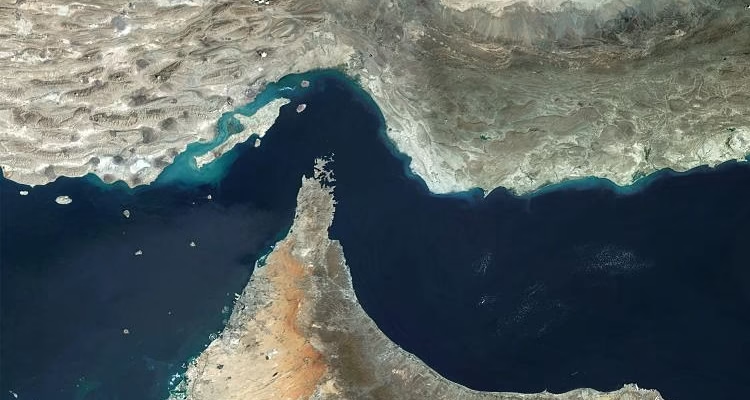
News Desk: Tehran has announced that the strategically crucial Strait of Hormuz will remain open for international shipping, but warned that vessels linked to countries “at war with Iran” would not be allowed free passage amid continuing tensions in West Asia.
Iranian Foreign Minister Abbas Araghchi said Tehran has “no trust in the United States” and would only return to negotiations if Washington proves it is serious about diplomacy and regional peace.
IranianForeignMinisterAbbasAraghchi said theStrait ofHormuz remainsopen toall vessels except those belonging to countries “at war with Iran,” adding that thestrategic waterway fallswithin theterritorial waters of Iran andOman and should bemanaged exclusively by the two nations. pic.twitter.com/V1X3Ejaxbz
— Ash (@bitcoins1stlady) May 15, 2026
Iran Softens Stand on Hormuz
Speaking during diplomatic engagements linked to the BRICS foreign ministers’ meeting in India, Araghchi said commercial vessels could transit through the Strait of Hormuz provided they were not affiliated with hostile nations and complied with coordination procedures set by the Iranian navy.
The statement marks a partial easing of Iran’s earlier restrictions after Tehran had tightened control over the vital maritime route following the US-Israel military offensive against Iran earlier this year.
Iran has repeatedly maintained that the Strait remains open for “friendly” or neutral nations, while ships linked to adversarial countries may face restrictions.

‘No Trust in America’
Araghchi accused Washington of sending contradictory signals during peace efforts and said Tehran no longer trusts US commitments.
According to the Iranian foreign minister, negotiations can move forward only if the United States adopts a consistent approach and respects Iran’s sovereignty and security concerns.
Iran has also criticised US naval activities in the Gulf, calling them provocative and destabilising for the wider region.
Global Oil and Shipping Concerns Rise
The Strait of Hormuz remains one of the world’s most important energy corridors, carrying nearly one-fifth of global oil and gas supplies. Any disruption in the narrow waterway immediately impacts global energy markets and shipping operations.
The ongoing tensions have already led to higher maritime insurance costs, rerouting of commercial vessels and growing concerns among global shipping companies.
Several reports indicate that some vessels continue to pass through the Strait under coordinated arrangements with Iranian authorities, while many international operators remain cautious because of the volatile security situation.
China, Russia Push for Dialogue
China and Russia have opposed stronger Western-backed moves against Iran over Hormuz and have instead called for diplomatic engagement and negotiations.
Tehran has also welcomed mediation efforts by countries such as India and China, signalling openness to a broader diplomatic solution to the crisis.
Despite fragile ceasefire efforts and intermittent negotiations, the Strait of Hormuz continues to remain at the centre of the escalating geopolitical confrontation in West Asia.



Solution should be quick