New Delhi: In a development that could reshape India’s opposition politics ahead of future national elections, speculation is mounting over a possible merger or strategic integration between the Congress and the Trinamool Congress (TMC), following a high-profile meeting between Congress veteran Sonia Gandhi and TMC supremo Mamata Banerjee in New Delhi.
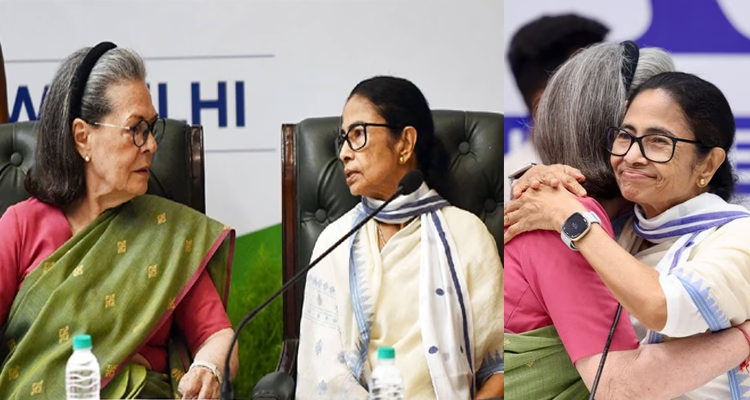
Political circles were abuzz after Mamata Banerjee visited Sonia Gandhi at her 10 Janpath residence on Tuesday evening, marking their first such one-on-one meeting in nearly five years. The meeting came amid an unprecedented crisis within the TMC, with the party facing defections, internal rebellion and growing uncertainty over its future direction.
According to political sources, the discussions went beyond routine INDIA bloc coordination and reportedly focused on the possibility of creating a stronger and more unified opposition structure capable of challenging the BJP at the national level. Sources familiar with the developments claim that Congress has explored the idea of bringing Mamata Banerjee into a larger national leadership framework.
Unconfirmed reports suggest that Sonia Gandhi informally floated the idea of offering Mamata Banerjee the position of National Vice-President in a restructured Congress-led opposition platform. While neither Congress nor TMC has officially acknowledged such discussions, the speculation has gained traction due to the timing of the meeting and the rapidly evolving political situation in West Bengal.
कांग्रेस में TMC के विलय को लेकर सूत्रों के हवालों से बड़ी जानकारी सामने आई है. सोनिया गांधी ने ममता बनर्जी को राष्ट्रीय उपाध्यक्ष का प्रस्ताव दिया है साथ ही अभिषेक बनर्जी को कांग्रेस महासचिव का पद देने का प्रस्ताव रखा है. हालांकि इस पर ममता ने कुछ फैसला लेने से पहले एक हफ्ते का… pic.twitter.com/jikOLXK2Sf
— ABP News (@ABPNews) June 10, 2026
The TMC has been grappling with one of the most serious crises in its history following the party’s electoral setback in West Bengal and a series of rebellions by MPs and MLAs. Several leaders have either resigned or openly challenged the Mamata-Abhishek Banerjee leadership, triggering concerns about the party’s long-term viability.
For Congress, which has been seeking to strengthen opposition unity under the INDIA alliance umbrella, a closer association with Mamata Banerjee could significantly expand its political reach in eastern India. For Mamata, alignment with Congress may offer a national platform at a time when her party faces internal turbulence.
Political analysts believe that while a formal merger remains unlikely in the immediate future, the possibility of a strategic alliance, parliamentary coordination or even a phased integration of political structures cannot be ruled out.
Both parties have maintained public silence on the specifics of the meeting. However, the optics of Sonia Gandhi and Mamata Banerjee sharing a warm exchange shortly after the INDIA bloc meeting have sent a strong political signal that opposition forces may be exploring new formulas to consolidate their strength.
Whether the discussions ultimately lead to a merger, a joint political platform, or merely deeper cooperation within the INDIA alliance remains to be seen. What is clear, however, is that the Sonia-Mamata engagement has reignited debate about the future shape of India’s opposition politics.