
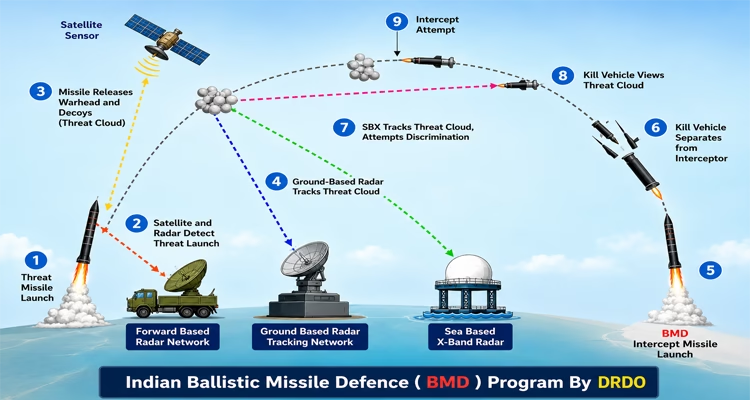
What is India’s Ballistic Missile Defence System (BMD)? Learn how DRDO’s advanced multi-layered missile shield can detect, track and destroy enemy ballistic missiles, including threats with ranges up to 5,000 km.

India has achieved a major strategic milestone with the successful demonstration of its advanced Ballistic Missile Defence (BMD) System, a multi-layered shield designed to detect, track and destroy hostile ballistic missiles before they can strike their targets. Following a series of successful flight tests conducted by the Defence Research and Development Organisation (DRDO) on June 10 and 11, India has significantly strengthened its ability to counter long-range missile threats.
The breakthrough places India among a select group of nations possessing advanced missile interception capabilities, enhancing the country’s security against evolving regional and global threats.
What Is a Ballistic Missile Defence System?
A Ballistic Missile Defence (BMD) system is a defensive network designed to intercept and destroy incoming ballistic missiles before they reach their intended targets. Unlike offensive missile systems, the BMD acts as a protective shield, safeguarding cities, military installations and critical infrastructure from missile attacks.
The system combines powerful radars, tracking sensors, command-and-control centres and interceptor missiles. Once an enemy missile is detected, the system calculates its trajectory and launches interceptor missiles to destroy it either in the atmosphere or outside it.
How India’s Multi-Layered Missile Shield Works
India’s BMD architecture operates through multiple layers of defence, giving it several opportunities to neutralise an incoming threat.
The system employs exo-atmospheric interceptors, which engage missiles outside the Earth’s atmosphere, and endo-atmospheric interceptors, which destroy threats within the atmosphere. This layered approach significantly increases the probability of a successful interception.
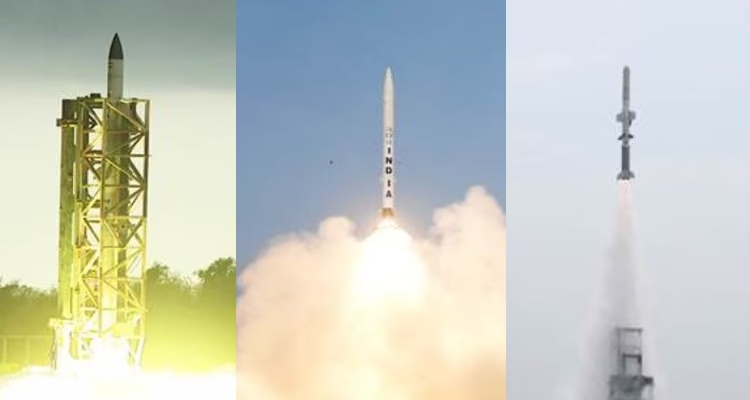
The latest tests demonstrated the system’s ability to counter ballistic missiles with ranges between 2,000 and 5,000 kilometres, commonly classified as Intermediate-Range Ballistic Missiles (IRBMs).
DRDO has successfully tested the Phase-II AD-II Ballistic Missile Defence (BMD) interceptor, marking a major milestone in India’s missile shield programme.
The interceptor is capable of engaging and destroying incoming ballistic missiles in the 5,000-km class, significantly… pic.twitter.com/JGf7m98gFK— Indian Defence Times (@IndianDefenceT) June 13, 2026
A Shield Against ICBM-Class Threats
One of the most significant outcomes of the recent trials is India’s growing capability to counter threats in the Intercontinental Ballistic Missile (ICBM) category.
ICBMs are among the world’s most powerful strategic weapons. Typically capable of travelling more than 5,500 kilometres, these missiles can carry conventional or nuclear warheads across continents. After launch, they travel into space before re-entering the atmosphere at extremely high speeds to strike their targets.
Intercepting such missiles requires sophisticated tracking systems, advanced radar networks and high-speed interceptor technology. The successful demonstration of India’s Phase-II BMD system marks a major advancement in this direction.
DRDO’s Historic June Breakthrough
During the June 10-11 trials, DRDO conducted three consecutive flight tests that successfully validated key elements of India’s missile defence architecture. Interceptor missiles accurately tracked and engaged their designated targets, proving the effectiveness of the country’s indigenous defence technologies.
The successful tests showcased India’s ability to build a credible protective shield against long-range ballistic missile threats and strengthened its strategic deterrence capabilities.
Defence Minister Rajnath Singh hailed the achievement as a landmark moment for India’s defence preparedness and technological self-reliance.
Naval Missile Test Adds Maritime Firepower
Alongside the missile defence trials, DRDO also successfully carried out the maiden flight test of the Naval Anti-Ship Missile-Medium Range (NASM-MR).
The missile is designed to strengthen the Indian Navy’s capability to engage hostile warships at medium ranges, enhancing India’s maritime strike power and deterrence in the Indian Ocean region.
India Joins an Exclusive Defence Club
With the successful demonstration of its advanced missile defence system, India has reinforced its position among a handful of nations possessing sophisticated ballistic missile interception capabilities.
The achievement represents a major step forward in India’s quest for self-reliance in defence technology and provides an additional layer of security against future missile threats. As geopolitical tensions and missile technologies continue to evolve, the BMD system is expected to become a cornerstone of India’s national security architecture, ensuring that the country remains prepared to counter some of the most advanced aerial threats in the world.