CNFF 2026 Opens Film Entries, Focuses on Bharat’s Heritage, Culture and National Pride
by Nava Thakuria
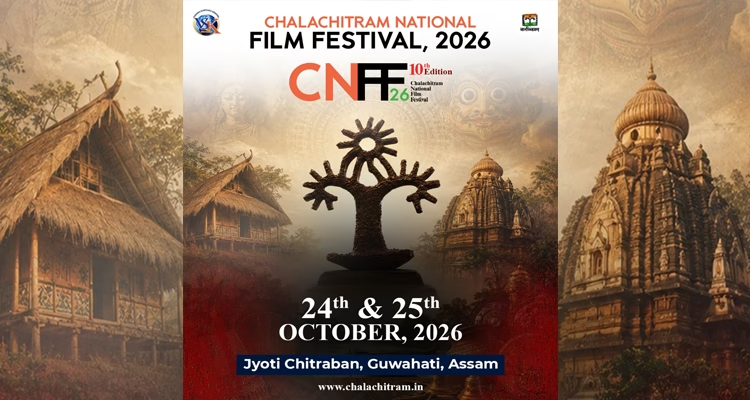
Guwahati: Film enthusiasts, cine critics, and filmmakers from across eastern India will have a unique opportunity to experience cinema rooted in nationalism, Indian civilization, culture, and heritage as the 10th edition of the Chalachitram National Film Festival (CNFF) unfolds on 24–25 October 2026 at the Jyoti Chitraban Film Studio premises in Kahilipara, Guwahati.
Organised by Chalachitram (https://chalachitram.in), a subsidiary of Vishwa Samvad Kendra, Assam, the festival will showcase a curated selection of short films and documentaries dedicated to promoting national consciousness and celebrating Bharat’s timeless cultural legacy. Outstanding entries will be honoured with trophies, certificates, and cash prizes in the presence of eminent film personalities, critics, and cinephiles.
Held under the mentorship of Bharatiya Chitra Sadhna, the festival was launched in 2017 as the Guwahati Film Festival before being rechristened as the Chalachitram National Film Festival in 2019. Since then, it has been organised around the central theme, “Our Heritage, Our Pride,” covering a wide spectrum of subjects, including Indian heritage, indigenous communities, freedom movement heroes, epics and mythology, national integration, arts and artisans, Yoga, meditation, Ayurveda, manuscripts, traditional paintings, family values, cultural nationalism, women’s empowerment, environment, tourism, handicrafts, textiles, wood carving, music, indigenous festivals, traditional sports, monuments, social reformers, as well as the tea and oil industries.
A distinguished jury comprising filmmakers, artistes, critics, writers, and media professionals will evaluate the entries. In the North East India category, awards will be presented for Best Short Feature, Best Documentary, Best Director, Best Screenplay, Best Cinematography, and Best Editing. The All India category will feature awards for Best Short Feature and Best Documentary.
The competition is open to both professional and emerging filmmakers. Films must have a duration of one to 25 minutes and should have been produced between 1 September 2025 and 1 September 2026.
The submission schedule is as follows:
- Early Bird: 10–30 June 2026 (No entry fee)
- Regular Deadline: 1–20 July 2026 (₹500)
- Final Deadline: 21 July–2 September 2026 (₹1,000)
Entries may be submitted directly to the CNFF office via chalachitramne@gmail.com or through FilmFreeway.
India today hosts several prestigious film festivals celebrating diverse cinematic expressions. Over the years, CNFF has carved a niche for itself among notable national film festivals such as the MAMI Mumbai Film Festival, Jagran Film Festival, Brahmaputra Valley Film Festival, National Science Film Festival, Cinefan Festival of Asian and Arab Cinema, Rajasthan Film Festival, Vibgyor Film Festival, Verité Film Festival, Indogma Film Festival, Jeevika Film Festival, and several others.
Reflections from the 9th Edition
The 9th Chalachitram National Film Festival was inaugurated by Dr. Sunil Mohanty, Asom Kshetra Prachar Pramukh of the Rashtriya Swayamsevak Sangh (RSS), who lit the ceremonial lamp before portraits of Bharat Mata, Dr. Bhupen Hazarika, Zubeen Garg, and Deepak Sarma.
More than 30 short features and documentaries were screened across competitive and non-competitive sections, presenting compelling narratives on contemporary social realities alongside India’s rich cultural traditions.
The selected films explored themes such as the loneliness of old age, the search for dignity and belonging, redefining the meaning of death, environmental conservation, greed and corruption, the preservation of India’s civilisational heritage, and the erosion of family values. Several films poignantly portrayed elderly professionals living in urban isolation, highlighting their emotional struggles and the need for compassion and community support.
Other films drew inspiration from folk traditions, songs, and rituals while depicting the changing dynamics of Indian families. Social issues such as caste discrimination, the struggles of underprivileged communities, and the determination to overcome prejudice were presented with remarkable sensitivity.
The festival also showcased films on differently abled and slow-learning children, offering audiences an intimate glimpse into their emotional world. Several entries focused on the matriarchal social system of Northeast India, where men traditionally become part of their wives’ families after marriage, often confronting emotional isolation.
Audiences were equally captivated by documentaries on Assam’s traditional string puppetry, indigenous magic practices, centuries-old textile traditions, folklore, and the preservation of rural cultural heritage threatened by modernisation.
Mental health among young people, social alienation, and the rediscovery of love, belonging, and responsibility also emerged as important themes. These narratives ultimately conveyed hope, resilience, and the strength of family and community bonds.
The closing ceremony was attended by the then Speaker of the Assam Legislative Assembly, Biswajit Daimary, along with distinguished filmmakers, artists, dignitaries, and cinema lovers.
Speaking on behalf of the organising committee, VSK Assam Secretary Kishor Shivam, CNFF President Nava Thakuria, and Secretary Bhagawat Pritam expressed confidence that the festival would continue to inspire budding filmmakers to use cinema as a powerful medium for social transformation, cultural preservation, national integration, and the empowerment of underprivileged communities across the country.