New Delhi: The Indian Space Research Organisation (ISRO) has successfully completed three critical qualification tests for the Gaganyaan mission’s Crew Module, marking another major milestone in India’s preparations to send astronauts into space. The tests validated key safety systems designed to protect astronauts during splashdown, module separation, and re-entry, bringing the country’s maiden human spaceflight mission a step closer to reality.
Crew Module Uprighting System Passes Splashdown Test
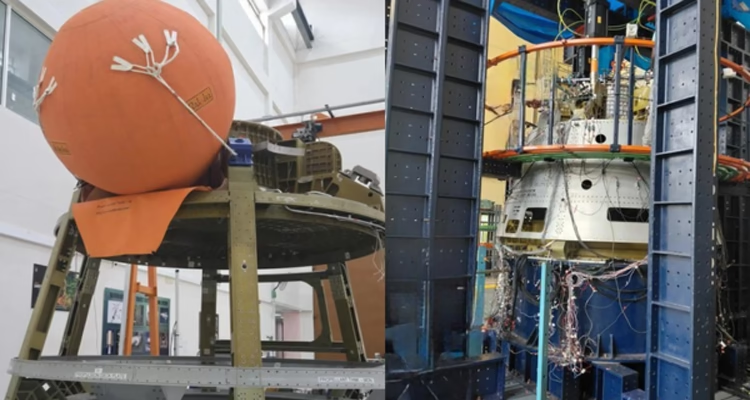
The first qualification test successfully demonstrated the Crew Module Uprighting System (CMUS), a vital safety feature that ensures the capsule automatically returns to an upright position after splashing down in the sea.
The system uses stored cold-gas technology to inflate flotation devices through high-pressure gas cylinders and control valves. During the trial, ISRO validated the system’s inflation performance and confirmed that it met all operational requirements across varying gas-pressure conditions, ensuring astronauts can be safely recovered after landing.
𝗥𝗲𝗰𝗲𝗻𝘁𝗹𝘆 𝗜𝗦𝗥𝗢 𝗵𝗮𝘀 𝗰𝗼𝗺𝗽𝗹𝗲𝘁𝗲𝗱 𝟯 𝗺𝗮𝗷𝗼𝗿 𝗾𝘂𝗮𝗹𝗶𝗳𝗶𝗰𝗮𝘁𝗶𝗼𝗻 𝘁𝗲𝘀𝘁𝘀 𝗳𝗼𝗿 𝘀𝘂𝗯𝘀𝘆𝘀𝘁𝗲𝗺𝘀 𝗼𝗳 𝘁𝗵𝗲 𝗚𝗮𝗴𝗮𝗻𝘆𝗮𝗮𝗻 𝗖𝗿𝗲𝘄 𝗠𝗼𝗱𝘂𝗹𝗲 (𝗖𝗠) 🚀
𝟭. 𝗖𝗠𝗨𝗦 𝗜𝗻𝗳𝗹𝗮𝘁𝗶𝗼𝗻 𝗧𝗲𝘀𝘁
Crew Module Uprighting System (CMUS) is… pic.twitter.com/Wipj74iKBY— ISRO Spaceflight (@ISROSpaceflight) July 12, 2026
Successful Separation of Crew-Service Module Connection
The second test focused on the Crew Module-Service Module Connect Disconnect System (CS-CDS), which links the Crew Module with the Service Module through electrical and hydro-pneumatic umbilicals.
The system consists of two connectors—CSU-1 and CSU-2. While CSU-1 separates when the Service Module detaches during re-entry, CSU-2 disconnects shortly before the Crew Module enters Earth’s atmosphere.
ISRO successfully carried out the separation test of CSU-2 using a simulated Crew Module, confirming clean separation, structural stability of the module panel, and the robustness of its interface systems under mission conditions.
Apex Cover Structure Withstands High-Stress Qualification Test
The third qualification test assessed the Crew Module’s structural strength during the separation of the Apex Cover, which shields the parachutes throughout the mission.
Before parachute deployment, the cover is jettisoned using pyrotechnically actuated thrusters. To simulate flight conditions, engineers applied reaction loads nearly 1.75 times higher than expected during the actual mission. The module successfully withstood the stresses, confirming sufficient design margins and structural integrity for safe parachute deployment during re-entry.
Another Step Towards Gaganyaan
The latest achievements come just days after ISRO successfully completed the Integrated Main Parachute Air Drop Test (IMAT) for the Gaganyaan programme, validating one of the mission’s most critical recovery systems. Together with earlier parachute, propulsion and escape-system tests, the newly qualified Crew Module systems significantly strengthen the mission’s readiness.
Gaganyaan aims to make India the fourth nation, after the United States, Russia and China, to independently send astronauts into space and safely return them to Earth. ISRO is expected to conduct a series of uncrewed test missions before launching the country’s first crewed spaceflight.