Caracas/Washington: In a tightly coordinated air operation, the United States is reported to have used its most advanced stealth fighters and electronic warfare (EW) platforms to neutralise Venezuela’s Russian- and Chinese-backed air defence network, effectively blinding radars and paralysing command systems at the opening stage of the mission that culminated in the arrest of President Nicolás Maduro.
Stealth and electronic attack at the core
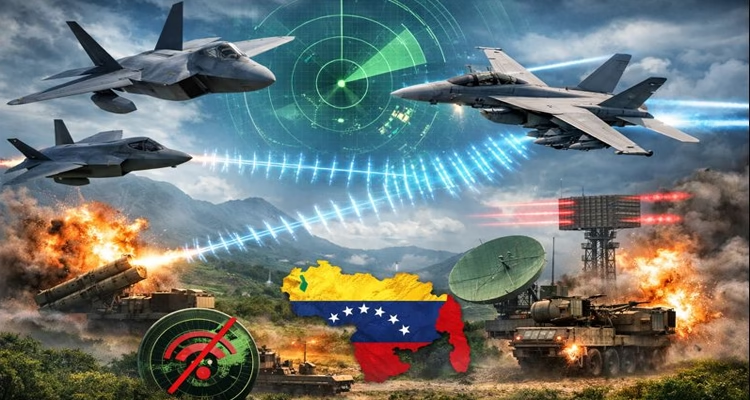
According to defence analysts, the operation relied on a classic modern warfare formula: stealth penetration combined with overwhelming electronic attack. Low-observable aircraft such as the F-35 and F-22 reportedly entered Venezuelan airspace while EW platforms jammed, spoofed and confused ground-based radars and communication links.
This electronic “fog” disrupted the ability of air-defence crews to distinguish real targets from false signals, delaying or preventing missile launches during the most critical hours of the operation.
Breaking the sensor-to-shooter chain
Venezuela’s air defence architecture is built around Russian-origin missile systems and Chinese radar and surveillance equipment. While formidable on paper, such systems depend heavily on uninterrupted data flow between radars, command centres and launch units.
US electronic warfare is believed to have targeted this vulnerability directly—severing links between sensors and shooters, degrading situational awareness, and isolating individual units. Once fragmented, the network reportedly struggled to coordinate any meaningful response.
Precision strikes after electronic suppression
With radars suppressed and command nodes disrupted, follow-on precision strikes were reportedly carried out against selected air-defence assets and control facilities. Analysts say this sequence—jam first, strike second—is designed to collapse an integrated air-defence system without the need for prolonged aerial bombardment or large-scale ground invasion.
Why Russian and Chinese systems struggled
Military experts note that export versions of advanced air-defence systems often lack the full spectrum of counter–electronic warfare capabilities used by the original manufacturers. Maintenance challenges, limited training, and imperfect system integration further reduce effectiveness when facing a technologically superior opponent.
In Venezuela’s case, the mix of legacy and newer systems reportedly failed to operate as a single, resilient network once subjected to sustained electronic pressure.
Strategic and geopolitical fallout
The reported success of the operation has wider implications. It reinforces the continued dominance of stealth aircraft and electronic warfare in modern conflicts and raises questions for countries relying on imported air-defence systems as deterrence tools.
Politically, the incident has intensified criticism from Russia and China, both of which have condemned the US action and warned of long-term consequences. It is also likely to accelerate global efforts to harden air-defence networks against electronic attack and cyber disruption.
The bigger picture
If the accounts hold true, the Venezuela episode underscores a defining reality of 21st-century warfare: control of the electromagnetic spectrum can be as decisive as firepower itself. By blinding sensors and silencing networks, advanced militaries can neutralise even sophisticated air defences—often before a single missile is fired in anger.