 by Dr. Vinod Chandrashekhar Dixit
January 14, the day of Makar Sankranti, heralds a change of season and is best experienced at the very heart of the festivities. In Ahmedabad, the world heritage city, Makar Sankranti—popularly known as Uttarayan—is synonymous with kite flying. While the festival is celebrated across India in diverse cultural forms, its spirit finds unmatched expression in Gujarat, where the skies come alive with colour, competition, and celebration.
Makar Sankranti is considered one of the most auspicious days for Hindus and is observed throughout the country with devotion, fervour, and joy. The word Makar refers to Capricorn, while Sankranti signifies transition. The term Uttarayan is derived from the Sanskrit words Uttara (north) and ayana (movement), indicating the Sun’s northward journey on the celestial sphere—a phase regarded as highly auspicious in Indian tradition.
The International Kite Festival held in Ahmedabad draws kite flyers and enthusiasts from across India and around the world. Celebrated over a week across cities in Gujarat, Uttarayan marks the time when winter gradually gives way to summer. Days grow longer, skies clearer, and a cool breeze adds to the festive mood. A sense of anticipation and jubilation grips the people as they celebrate thanksgiving, renewal, and togetherness.
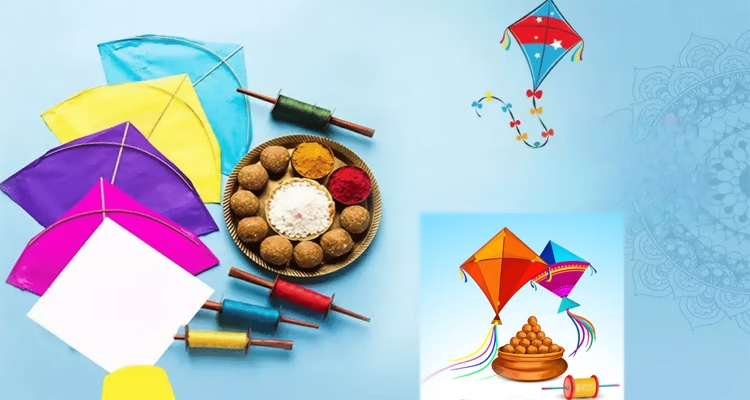
Kite flying is at the heart of Uttarayan celebrations. More than just a sport, it is an expression of joy and community bonding. Though the festival is observed throughout Gujarat, its most electrifying form is seen in Ahmedabad, where rooftops transform into lively arenas of friendly rivalry. Months before the festival, households across the state begin manufacturing kites in preparation for the grand day.
Today, kite-making has evolved into a serious industry. Using lightweight paper and bamboo, traditional kites—mostly rhombus-shaped with a central spine and a single bow—are crafted in massive numbers. The festival provides employment to nearly three lakh people and even attracts corporate branding, making kites a cost-effective promotional medium.
A visit to the iconic Patang Bazaar during Uttarayan week offers proof of the city’s deep obsession with kites. Open 24 hours a day, the market buzzes through the night as families crowd the streets, bargaining, laughing, and stocking up for the big day. The atmosphere is festive, energetic, and unmistakably Ahmedabad.
On Uttarayan, the city’s skyline is a breathtaking canvas of colourful kites of every size and shape. Rooftops across Ahmedabad, Surat, Vadodara, Rajkot, and Jamnagar are packed with people flying kites from morning till evening. The streets grow unusually quiet as residents take to their terraces, eyes fixed on the sky in spirited competition.
No festival in Gujarat is complete without food. A winter delicacy, undhiyo—a rich preparation of seasonal vegetables, beans, and roots—takes centre stage on Uttarayan, adding flavour to the celebrations.
Regardless of background or belief, anyone in Gujarat on January 14 is inevitably drawn into the joy of the festival. Amid laughter, shared food, and colourful skies, Uttarayan in Ahmedabad stands as a vivid celebration of culture, community, and the simple joy of letting kites soar free.