
Dr. Vinod Chandrashekhar Dixit
Jammu & Kashmir’s 100-day Nasha Mukt campaign led by Manoj Sinha targets drug abuse with strict action, awareness drives, and community participation to protect youth and build a drug-free society.

Lieutenant Governor Manoj Sinha deserves significant appreciation for launching the 100-day Nasha Mukt Jammu & Kashmir campaign, emphasizing strict action against those involved in drug smuggling. He warned that individuals harming the future of youth will not be spared, announcing measures such as cancellation of passports and Aadhaar cards, and attachment of properties of offenders. This sends a strong message that the administration is committed to tackling the drug menace. The campaign aims to create awareness about the dangers of substance abuse and promote a drug-free lifestyle, especially among the youth.
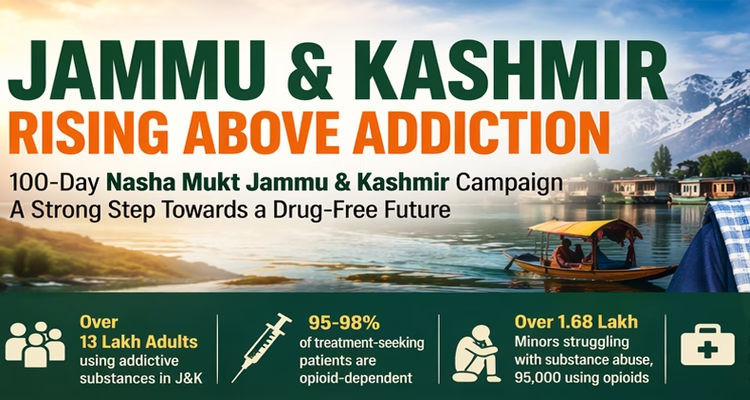
Jammu and Kashmir faces a serious challenge, with over 13 lakh adults reportedly using addictive substances. Opioids are the most prevalent category, followed by alcohol, cannabis, and sedatives. Intravenous heroin use is on the rise, increasing the risk of transmission of diseases such as Hepatitis B, Hepatitis C, and HIV. Nearly 95–98% of treatment-seeking patients are opioid-dependent, particularly on heroin.
The government has also launched initiatives like Nasha Mukt Bharat Abhiyaan, focusing on awareness, prevention, and rehabilitation. Alarmingly, over 1.68 lakh minors are struggling with substance abuse, including around 95,000 using opioids.
The campaign emphasizes public participation, awareness drives, and community engagement. Schools, colleges, and local organizations are actively joining the movement. As part of the initiative, Deputy Commissioner Baramulla, SF Hamid, flagged off a padyatra to spread awareness against drug abuse, with participation from locals, students, and officials. The administration is working to involve communities and promote a drug-free Baramulla. Similar initiatives are being carried out across the region, with people taking pledges to stay drug-free and supporting those battling addiction.
Key strategies include awareness and sensitization, youth engagement, community participation, and rehabilitation support. The impact is already visible, with increased awareness about the dangers of substance abuse and growing community involvement in anti-drug efforts.
Drugs severely affect the brain’s communication system, disrupting nerve cell function. Substances like heroin and marijuana mimic natural chemical messengers, overstimulating the brain’s reward circuit. Addiction can develop at any age, but early use significantly increases the risk. Teenagers are particularly vulnerable due to ongoing brain development.
Governments, families, schools, and communities must work together to combat drug trafficking and substance abuse. Manoj Sinha emphasized that Jammu and Kashmir is at a critical juncture, with attempts being made to push the youth into addiction. The campaign aims to provide support to those struggling and to build a healthier, happier society.
The success of the campaign depends on collective efforts. As Sinha noted, it does not belong to any one individual—it is about the future of Jammu and Kashmir’s youth. With sustained awareness, support, and strict enforcement, the region can overcome the drug menace.
The administration is leaving no stone unturned, from organizing rallies and seminars to strengthening rehabilitation support systems. Encouragingly, people across Jammu and Kashmir are responding positively, with many stepping forward to support the cause.
The Nasha Mukt campaign is a step in the right direction. With continued commitment and collective participation, Jammu and Kashmir can move towards a healthier and addiction-free future.