Sanjay Saxena
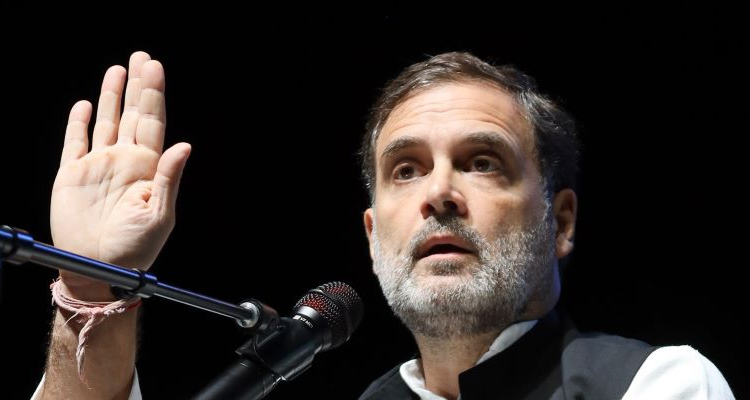
Lucknow A generational shift is reshaping the Congress as Rahul Gandhi’s long-standing vision of promoting younger leaders gains momentum. From Rajya Sabha nominations to state leadership changes, a new generation is emerging at the forefront of the party.

A quiet yet significant transformation appears to be underway within the Indian National Congress. The country’s oldest political party is witnessing a gradual shift in leadership and organizational priorities, one that many observers see as the culmination of a long-standing effort associated with Rahul Gandhi’s political vision.
Ever since entering active politics in 2004, Rahul Gandhi has consistently advocated for greater participation of younger leaders in the party structure. His emphasis has often been on creating a more grassroots-oriented, energetic, and politically responsive organization capable of reconnecting with voters beyond the traditional corridors of power. While this vision initially faced resistance from established leaders and entrenched organizational structures, recent developments suggest that a generational transition is increasingly becoming visible within the Congress.
Rajya Sabha Nominations Reflect a Changing Power Structure
The recent Rajya Sabha nominations announced by the Congress have been viewed by many political observers as a clear indication of this evolving strategy. Several leaders considered close to the current party leadership and actively involved in organizational work have been rewarded with nominations.
Among the notable names are Pawan Khera, Mansoor Ali Khan, Meenakshi Natarajan, Neeraj Dangi, Praveen Chakravarty, and Pranav Jha. Most of these leaders have been associated with organizational responsibilities, policy formulation, communications, electoral management, and grassroots mobilization.
Praveen Chakravarty, for instance, has played a prominent role in the party’s policy and data-driven initiatives, while Pawan Khera has emerged as one of the Congress’s most visible public faces in television debates and political communication. The elevation of such leaders signals an increasing preference for those actively engaged in strengthening the party’s organizational framework.
For many within the Congress, these appointments send a message that political visibility, organizational commitment, and performance are becoming important factors in leadership advancement.
Leadership Transition in the States
The generational shift is not confined to Delhi. Similar trends are visible in several state units where younger or relatively younger leaders have been entrusted with greater responsibility.
In states such as Kerala, Telangana, Himachal Pradesh, and Punjab, leadership roles have increasingly been assigned to figures seen as capable of connecting with younger voters and adapting to changing political realities. The rise of leaders such as V.D. Satheesan, Revanth Reddy, Sukhvinder Singh Sukhu, and Amarinder Singh Raja Warring reflects a broader effort to project a new leadership profile across the country.
At the same time, senior leaders continue to retain influence, often in advisory, parliamentary, or national-level roles. Rather than an abrupt replacement of the old guard, the Congress appears to be pursuing a calibrated transition that seeks to balance experience with renewal.
A Shift from Personality-Based Politics to Organizational Politics?
One of the most notable aspects of the current phase is the increasing emphasis on organizational structures and collective leadership. Congress leaders associated with youth organizations, grassroots campaigns, and state-level mobilization are being entrusted with larger responsibilities.
Young and middle-generation leaders such as Syed Naseer Hussain, Krishna Allavaru, Saptagiri Ulaka, and others have received significant organizational assignments. Their rise reflects a broader effort to strengthen the party’s presence in key states and expand its pool of future leadership.
Political analysts argue that this strategy mirrors a recognition within the Congress that electoral revival requires more than charismatic leadership. It demands a robust organizational network capable of sustained engagement with voters.
Bharat Jodo Yatra and the New Political Narrative
The transformation within the Congress gained momentum following the Bharat Jodo Yatra, which helped reposition Rahul Gandhi as a more visible and active political leader. The campaign allowed the party to project an image of direct public engagement and grassroots outreach.
Since then, Congress leaders have increasingly focused on public mobilization, issue-based campaigns, and street-level political activism. Supporters argue that this marks a departure from the perception that the party was overly dependent on closed-door politics and elite decision-making.
Whether this strategy ultimately translates into electoral success remains to be seen. However, there is little doubt that the Congress today appears markedly different from the party Rahul Gandhi entered more than two decades ago.
The changes taking place within the Congress suggest that a long-term process of generational transition is gradually unfolding. While senior leaders continue to play an important role, younger and organizationally active leaders are increasingly occupying positions of influence.
For Rahul Gandhi, this evolution may represent the realization of a political project that began nearly twenty years ago—a project aimed at reshaping the Congress into a more dynamic, grassroots-oriented, and future-focused organization.
Whether this transformation will revive the party’s electoral fortunes remains an open question. What is becoming increasingly clear, however, is that the Congress is no longer the same organization it was at the beginning of the century, and the rise of a new generation is playing a central role in defining its future direction.