Ajay Kumar | Lucknow (U.P.)
The coaching clash in Patna’s Musallahpur Hat exposes the dark side of India’s coaching industry, where rivalry, violence, and commercial interests threaten the future of thousands of students preparing for competitive examinations.

The Musallahpur Hat area of Patna has long been regarded as one of India’s most prominent hubs for students preparing for competitive examinations. Every year, thousands of young aspirants arrive here carrying dreams of securing government jobs and building better futures. Yet, the recent scenes emerging from this educational hub have shocked not only Bihar but the entire country. Streets once lined with bookstores, coaching centers, and students were suddenly overshadowed by reports of clashes, stone-pelting, and heightened tensions between rival coaching groups.
The incident is not merely a dispute between two coaching institutes. It reflects a deeper crisis within India’s rapidly expanding coaching industry, where competition for students, market dominance, and commercial success increasingly threatens to overshadow the fundamental purpose of education.
A Clash Triggered by Rivalry
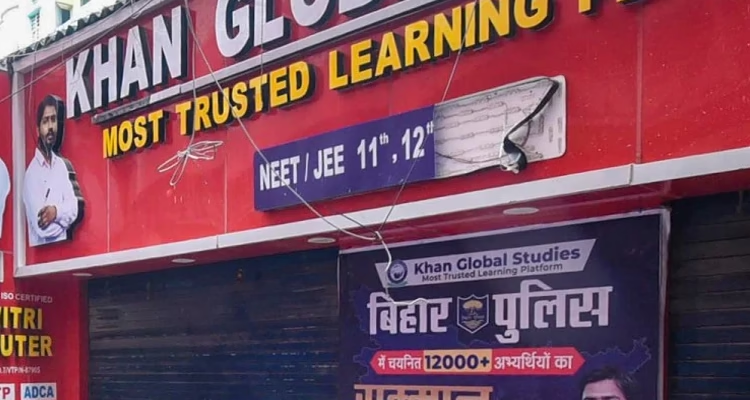
According to reports, the controversy reportedly began over promotional banners and advertisements related to examination results. Allegations emerged that one coaching institute’s publicity material had been placed over or near that of a rival institution, triggering tensions between supporters of both sides.
What began as a disagreement over posters soon escalated into confrontations on the streets. Reports of clashes, stone-pelting, and disorder transformed an area known for academic preparation into a zone of conflict. The episode raised serious concerns about the growing commercialization of education and the extent to which competition among coaching institutes has intensified.
Conflicting Claims and Investigations
Following the incident, prominent educator and coaching operator Faizal Khan, popularly known as Khan Sir, publicly alleged that his coaching center had come under attack and that firing had taken place during the clash.
However, subsequent police investigations reportedly examined CCTV footage and other evidence from the area. Media reports suggested that investigators did not initially find conclusive evidence supporting claims of firing by outsiders. Authorities subsequently detained certain individuals connected to the incident and continued their investigation into the circumstances surrounding the violence.
The differing accounts have highlighted the importance of allowing law-enforcement agencies to complete a thorough and impartial inquiry before any definitive conclusions are drawn.
Students Caught in the Middle
Perhaps the most disturbing aspect of the controversy is the role played by students. Following police action against individuals associated with the dispute, large groups of students reportedly took to the streets in support of their respective institutions and teachers.
This development raises a troubling question: Should students preparing for competitive examinations become participants in conflicts involving coaching managements?
The primary responsibility of educational institutions is to guide students toward academic success and responsible citizenship. When students become emotionally invested in institutional rivalries, the educational environment risks being replaced by factionalism and confrontation.
A Recurring Problem
The latest incident is not the first controversy associated with coaching rivalries in Patna’s educational districts. Over the years, various disputes, protests, and confrontations involving coaching operators have periodically surfaced.
Critics argue that inadequate regulation of the coaching sector has allowed unhealthy competition to flourish. Supporters of stricter oversight believe that stronger monitoring mechanisms are necessary to ensure that educational institutions remain focused on learning rather than commercial rivalry.
The Business of Education
The coaching industry today represents a multi-crore market. Institutions compete aggressively through advertising campaigns, result claims, social media outreach, and celebrity-style branding of educators.
While many coaching centers undoubtedly provide valuable educational services, the increasing commercialization of the sector has raised concerns among parents and education experts alike. The competition for enrollments often resembles corporate rivalry more than an academic mission.
The Patna incident serves as a reminder that education must remain centered on students rather than market share, branding, or institutional prestige.
The Need for Accountability
The matter is now subject to legal scrutiny, and authorities must ensure that the investigation proceeds fairly and transparently. Any individual found responsible for violence, intimidation, or violations of the law should face appropriate legal consequences, irrespective of status or popularity.
At the same time, educational institutions must recognize their broader social responsibility. Students and parents place immense trust in teachers and coaching centers. That trust must never be compromised by personal rivalries, commercial interests, or public confrontations.
The events in Patna represent more than a local dispute between coaching institutes. They expose the growing tensions within an education ecosystem increasingly driven by competition and commercialization.
Thousands of young people come to coaching centers seeking guidance, knowledge, and hope. They deserve classrooms, not battlegrounds; mentors, not rival camps; and opportunities, not conflicts.
If this incident prompts policymakers, educators, and society to re-examine the direction of the coaching industry, it may yet serve as a valuable lesson. The future of India’s students is too important to be sacrificed in wars for influence, popularity, or profit.