RNS: The United States (US) and Iran moved closer to a direct military confrontation after American forces intercepted multiple Iranian drones near the Strait of Hormuz and subsequently launched strikes against Iranian coastal radar installations in the strategically critical region.
According to U.S. military officials, four Iranian one-way attack drones were detected heading toward the Strait of Hormuz, one of the world’s most important maritime chokepoints. American aircraft intercepted and shot down the drones before they could pose a threat to commercial shipping and regional security.
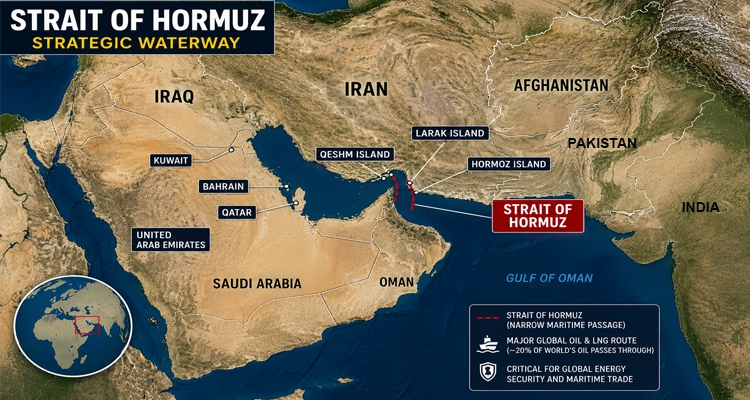
Following the drone interceptions, U.S. Central Command launched what it described as defensive strikes on Iranian surveillance radar facilities located along the country’s southern coast. The targeted sites reportedly included radar installations in Goruk and on Qeshm Island, both positioned close to the Strait of Hormuz.
Moments ago, CENTCOM forces shot down four Iranian one-way attack drones that were launched toward the Strait of Hormuz. The attack drones posed an immediate threat to regional maritime traffic. U.S. forces subsequently struck Iranian coastal surveillance radar sites in Goruk and…
— U.S. Central Command (@CENTCOM) June 5, 2026
Why the Strait of Hormuz Matters
The Strait of Hormuz is a narrow waterway connecting the Persian Gulf to the Gulf of Oman and the Arabian Sea. A significant share of the world’s oil and natural gas exports passes through the route every day, making it one of the most strategically important maritime corridors on the planet.
Any military escalation in the area immediately raises concerns about global energy supplies, shipping security, and regional stability.
US Says Action Was Defensive
American officials stated that the drones posed an immediate threat to maritime traffic and regional security. The destruction of the radar systems was aimed at preventing further attacks and limiting Iran’s ability to monitor or direct operations in the area.
The U.S. military emphasized that its actions were intended to protect commercial vessels and maintain freedom of navigation through international waters.
Iran Responds
Iran strongly condemned the American strikes and accused Washington of escalating tensions in the Gulf. Iranian military officials claimed they would respond to any attack on their territory and warned against further U.S. military operations near Iranian waters.
Reports from the region indicated heightened military activity, with air-defense systems placed on alert in several Gulf countries amid fears of retaliation.
Threat to Fragile Stability
The latest exchange comes at a time when diplomatic efforts aimed at reducing tensions between Washington and Tehran remain uncertain. Analysts warn that continued military actions by either side could trigger a broader regional crisis involving Gulf states and international shipping routes.
Security experts also caution that any disruption in the Strait of Hormuz could have significant consequences for global oil markets, potentially affecting energy prices worldwide.
Global Concerns Grow
The drone interceptions and subsequent strikes mark another chapter in the ongoing confrontation between the United States and Iran. While both sides have avoided a full-scale war, repeated military incidents in and around the Strait of Hormuz continue to fuel concerns about the possibility of a wider conflict in the Middle East.
With commercial shipping, energy supplies, and regional security at stake, international observers are closely monitoring developments in one of the world’s most volatile strategic regions.