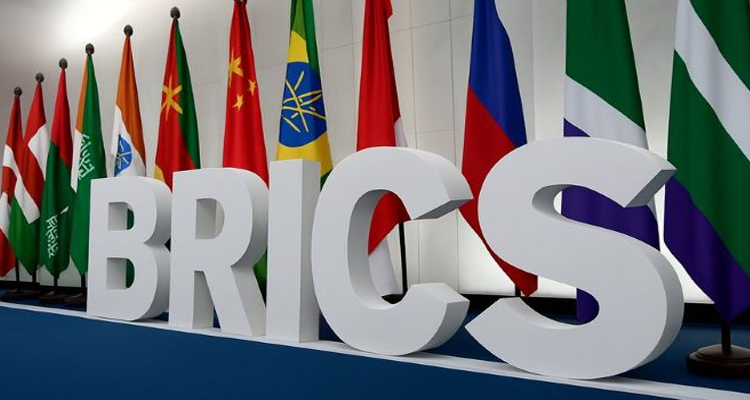
The BRICS Summit 2026, hosted by India in New Delhi, brings together 11 full members and 10 partner countries from across the Global South.
Key issues include UPI-based cross-border payments, greater use of national currencies, trade, investment and financial cooperation.
The summit will also focus on UN reform, terrorism, technology, climate change and sustainable development.
With BRICS expanding its global footprint, the New Delhi summit could shape the bloc’s economic and geopolitical role in the years ahead.

The 18th BRICS Summit, to be hosted by India in New Delhi on September 12–13, 2026, comes at a defining moment for the grouping. BRICS has expanded from its original five-member format to 11 full members and 10 partner countries, giving it a far broader geographical and economic footprint across the Global South. The year 2026 also marks 20 years of BRICS.
For India, the summit is not merely another diplomatic gathering. New Delhi’s priorities include strengthening economic and financial cooperation, expanding trade and investment, promoting digital connectivity and payment systems, addressing global security challenges and pushing for greater representation of developing countries in global institutions.
India assumed the BRICS chairship on January 1, 2026, for the fourth time. Its chairship is guided by the theme “Building for Resilience, Innovation, Cooperation and Sustainability”, with “Humanity First” as the broader vision.
What is BRICS?
BRICS began as BRIC, bringing together Brazil, Russia, India and China. South Africa joined in 2011, turning BRIC into BRICS.
The grouping subsequently underwent a major expansion. Egypt, Ethiopia, Iran, Saudi Arabia and the United Arab Emirates joined in the 2024 expansion, while Indonesia became the 11th full member in January 2025. The official BRICS framework describes the group as a political and diplomatic coordination forum for countries of the Global South.
BRICS traditionally operates around three broad areas: politics and security; economy and finance; and people-to-people cooperation. Its decisions are made by consensus rather than by majority vote.
The 11 Full Members of BRICS
The full BRICS membership in 2026 comprises:
- Brazil
- Russia
- India
- China
- South Africa
- Egypt
- Ethiopia
- Iran
- Saudi Arabia
- United Arab Emirates
- Indonesia
All 11 members participate in BRICS meetings where decisions are taken, with the decision-making process based on consensus.
The 10 Partner Countries
BRICS has a separate partner-country category, established at the Kazan Summit in October 2024. The category allows countries to participate more closely in BRICS without becoming full members.
The 10 recognised partner countries are:
- Belarus
- Bolivia
- Cuba
- Kazakhstan
- Malaysia
- Nigeria
- Thailand
- Uganda
- Uzbekistan
- Vietnam
Vietnam became the 10th BRICS partner country in June 2025.
Partner countries are generally invited to the BRICS Leaders’ Summit and Foreign Ministers’ meetings and can participate in other meetings when there is consensus among the full members.
BRICS 2026 at a glance
| Category | Countries |
|---|---|
| Full members — 11 | Brazil, Russia, India, China, South Africa, Egypt, Ethiopia, Iran, Saudi Arabia, UAE, Indonesia |
| Partner countries — 10 | Belarus, Bolivia, Cuba, Kazakhstan, Malaysia, Nigeria, Thailand, Uganda, Uzbekistan, Vietnam |
Together, the expanded grouping gives BRICS a much wider presence across Asia, Africa, the Middle East, Europe and Latin America.
UPI, Digital Payments and National Currencies: The Big Economic Issue
One of the most important issues at the 2026 summit is expected to be cross-border payments and greater use of national currencies in trade.
This is where India’s Unified Payments Interface (UPI) assumes particular importance.
Prime Minister Narendra Modi had already highlighted the issue at the 2024 BRICS Summit in Kazan, saying that trade in local currencies and smooth cross-border payments could strengthen economic cooperation among BRICS countries. He specifically pointed to UPI as an Indian success story and said India could cooperate with other BRICS members in this area.
The issue has since moved beyond a general political proposal. The 2025 Rio de Janeiro BRICS Declaration called for continued discussions on the BRICS Cross-Border Payments Initiative and welcomed the work of the BRICS Payment Task Force on possible interoperability among BRICS payment systems. The stated goal is to make cross-border payments faster, cheaper, more accessible, efficient, transparent and secure, while facilitating trade and investment.
For India, this could become one of the most significant outcomes of its 2026 chairship.
The idea is essentially to make national payment systems work more effectively across borders, allowing businesses and individuals to transfer money more easily without depending exclusively on traditional international payment channels.
Is BRICS creating a common currency?
No — this distinction is crucial.
The current BRICS agenda should not be described simply as the launch of a “BRICS currency.” The more concrete proposal concerns interoperable payment systems and greater settlement in national currencies.
Recent statements ahead of the New Delhi summit have also highlighted the distinction. Kremlin spokesperson Dmitry Peskov said Russia does not seek “de-dollarisation” and remains open to acceptable payment methods.
Therefore, the more accurate description is “local-currency trade and alternative cross-border payment mechanisms”, rather than “BRICS is launching a common currency.”
Why UPI Matters
India’s UPI has become an important part of its international digital-payment diplomacy. The system has already been introduced or linked with payment arrangements in several countries, including the UAE.
For BRICS, an interoperable digital-payment framework could potentially allow payment systems from different member states to communicate with one another. The larger objective would be to reduce transaction costs, speed up settlements and facilitate trade, investment and remittances.
It could also strengthen India’s position as a digital-payment technology leader within the expanded BRICS grouping.
Trade in National Currencies
The payment debate is closely linked to another major BRICS objective: increasing the use of national currencies for bilateral and intra-BRICS trade.
The 2025 Rio Declaration welcomed efforts to develop acceptable mechanisms for financing projects and programmes in local currencies and called for continued work on cross-border payments.
This is particularly significant for countries seeking greater flexibility in international transactions. However, the idea should not automatically be equated with a formal campaign to eliminate the US dollar from global trade.
The practical objective is more modest but potentially consequential: giving BRICS countries more options for settling trade and financial transactions directly in their own currencies.
Reform of Global Institutions
Another major issue for BRICS is the demand for a greater voice for developing countries in institutions such as the United Nations, IMF and World Bank.
The official BRICS framework says the grouping seeks greater legitimacy, equity in participation and efficiency in global institutions, alongside stronger sustainable development and social inclusion.
India’s 2026 chairship is therefore expected to keep the concerns of the Global South high on the agenda.
Security, Terrorism and Emerging Technologies
BRICS is no longer focused exclusively on economics.
India has also been pushing cooperation on terrorism, cyber security and emerging technologies. In June 2026, Prime Minister Modi met National Security Advisers and senior security officials from BRICS countries and emphasised the need for greater cooperation on these challenges.
The changing geopolitical environment makes this particularly important. The expanded BRICS includes countries with very different strategic relationships with the United States, Europe and one another. Reaching consensus on sensitive geopolitical questions could therefore be one of India’s biggest diplomatic challenges.
Trade, Investment and Development
Economic cooperation remains at the heart of BRICS.
The New Delhi summit is expected to focus on expanding trade and investment, financial cooperation and institutional cooperation. South Africa’s government, announcing President Cyril Ramaphosa’s participation, said the summit would focus on a people-centred development agenda, trade and investment, financial and institutional cooperation and reform of the UN and international financial institutions.
The New Development Bank (NDB), established by BRICS, is another important component of this economic architecture. The group has sought to expand financing for infrastructure and sustainable-development projects in emerging economies.
Climate, Sustainability and Inclusive Development
Sustainability is another pillar of India’s 2026 BRICS agenda.
India’s official BRICS programme highlights resilience, innovation, cooperation and sustainability, alongside education, entrepreneurship, youth development, health, inclusion and environmental responsibility.
The focus reflects a broader attempt to make BRICS not merely a geopolitical platform but also a mechanism for practical cooperation affecting development, technology, health, climate and human welfare.
A More Powerful but More Complex BRICS
The expansion from five to 11 full members and 10 partners has increased BRICS’ global reach—but it has also made consensus more difficult.
The members have different economic structures, foreign-policy priorities and relationships with major powers. India, for example, maintains strategic partnerships with both Western countries and BRICS members, while China and Russia often view BRICS as an important platform for challenging aspects of the existing global order.
This diversity can be a strength if BRICS concentrates on practical cooperation. But it can become a weakness when the grouping attempts to reach common positions on highly contentious geopolitical questions.
Why the 2026 New Delhi Summit Matters
The 18th BRICS Summit is therefore taking place at an important crossroads.
For India, the key challenge will be to balance economic ambition with geopolitical differences and turn the expanded grouping into a more practical institution.
The most closely watched areas are likely to include:
- UPI and cross-border digital payments
- Greater use of national currencies in trade
- BRICS financial cooperation
- Trade and investment
- Global governance and UN reform
- Terrorism and security cooperation
- Cyber security and emerging technologies
- Climate and sustainable development
- Health, education and youth cooperation
- Strengthening the voice of the Global South
The payment issue could prove especially significant because it connects India’s technological strength with BRICS’ broader economic ambitions. The 2025 BRICS declaration has already established a formal basis for discussing cross-border payment interoperability, while India’s UPI provides a functioning model from which other countries can potentially learn.
Bottom Line
BRICS 2026 is no longer simply the Brazil-Russia-India-China-South Africa grouping of its early years. It is now an expanded platform of 11 full members and 10 partner countries, spanning major economies and strategically important states across several continents.
As India hosts the September 12–13 New Delhi summit, the biggest question may not be whether BRICS can expand further, but whether its existing members can convert their growing collective weight into practical cooperation.
And among the most consequential proposals is the push for faster cross-border payments, UPI-linked digital payment cooperation and greater use of national currencies—an agenda that could gradually reshape how BRICS countries conduct trade without requiring the creation of a single BRICS currency.