
by Maguni Charan Behera
Former Professor of Indigenous Studies, Central University of Jharkhand, and Tribal Studies, Rajiv Gandhi University, Itanagar
Email: mcbehera1959@gmail.com
The Cockroach Janata Party’s Delhi protest highlighted India’s paper leak crisis, but did it offer real solutions? An analysis of exam corruption, political accountability, and the reforms needed to restore trust in the education system.
Introduction
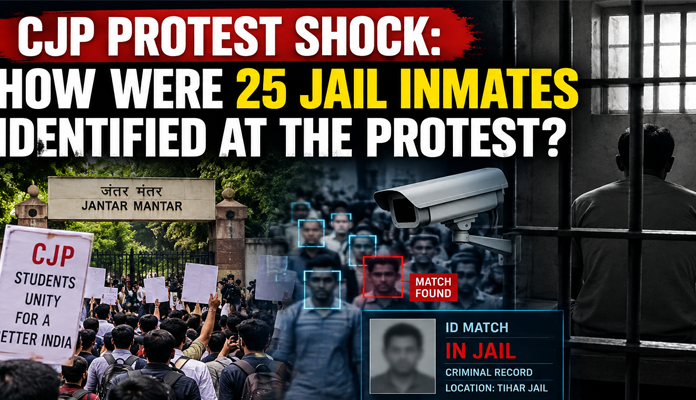
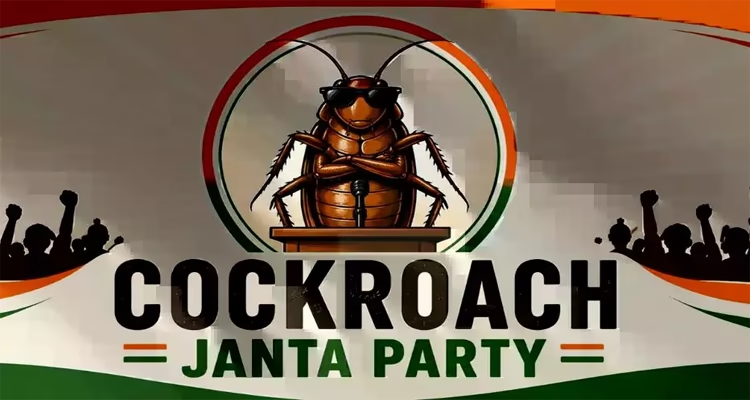
The protest organised by the Cockroach Janata Party (CJP) in New Delhi on June 6 was significant not merely because it highlighted the issue of examination paper leaks, but because it marked the transition of an online movement into a physical political presence. What had largely existed as a virtual platform suddenly occupied the streets, bringing together students affected by paper leaks, their parents, social activists, opposition leaders, and sections of the media critical of government policies.
The demonstration succeeded in attracting public attention and generating discussion. Yet an important question remains: did the event contribute to solving the problem, or did it primarily function as a political spectacle aimed at challenging the government of the day?
A Genuine Concern
Few would dispute that examination paper leaks constitute a serious national problem. For millions of students, competitive examinations are not merely tests; they are gateways to education, employment, social mobility, and a better future. Many candidates spend years preparing for these examinations, often at considerable financial and emotional cost to their families.
When question papers are leaked, the damage extends far beyond a single examination. Honest candidates lose faith in the system, deserving students are deprived of opportunities, and public confidence in institutions begins to erode. Moreover, questions arise about the competence of individuals who may benefit from unfair means, potentially affecting the quality of future professionals in critical sectors such as healthcare, engineering, and public administration.
Public anger over such incidents is therefore entirely justified.
Looking Beyond Governments
The central question, however, is not whether paper leaks are a problem. The real question is whether the solution lies in repeated protests against particular governments or in addressing the deeper causes that have allowed such incidents to persist for decades.
The CJP protest, like many similar movements before it, focused heavily on government accountability. Governments undoubtedly have a responsibility to protect the integrity of examination systems and punish those responsible for violations. However, viewing the issue solely through the lens of governmental failure risks overlooking a much larger reality.
Paper leaks are not unique to any one political party, ideology, or administration. Similar controversies have occurred under governments led by different parties across multiple states and over different periods of India’s political history. Recruitment examinations, entrance tests, and public service assessments have repeatedly faced allegations of irregularities in various parts of the country.
This pattern suggests that the problem transcends electoral politics. Governments may vary in their efficiency and responsiveness, but the underlying causes run much deeper than the fortunes of any single ruling party.
What the Protest Missed
This is where the CJP protest raises important questions. A movement that genuinely seeks change must do more than identify failures; it must also propose solutions.
The success of a protest should not be measured solely by the size of the crowd or the intensity of criticism directed at those in power. It should also be judged by whether it contributes to practical reforms. Did the protest offer a roadmap for preventing future leaks? Did it advocate specific technological safeguards, institutional reforms, legal measures, or transparency mechanisms?
Without a clear reform agenda, a movement risks becoming another exercise in political mobilisation rather than a meaningful effort to solve a longstanding problem.
The Deeper Problem
Paper leaks are not simply the result of administrative incompetence. Every leak involves a chain of actors: individuals entrusted with confidential information who betray that trust, intermediaries who organise illegal networks, candidates willing to seek unfair advantages, and officials who fail to detect or prevent wrongdoing.
Such a system cannot be explained by governance failures alone. It reflects a broader social challenge in which personal gain often takes precedence over ethical conduct.
At its core, the issue is linked to an increasingly competitive environment in which success is frequently pursued at any cost. Families invest heavily in education, opportunities remain limited, and competition is intense. Under such circumstances, some individuals become willing to secure advantages through unethical means.
The demand for leaked papers exists because there are people willing to purchase them. Without buyers, there would be no market.
This uncomfortable reality means that responsibility cannot be placed entirely on governments or criminal networks. Society itself must confront the values that allow such practices to flourish.
Ethics and Public Life
The discussion therefore extends beyond examinations. It touches broader concerns about corruption, wealth, power, and ethics.
Ambition and economic success are not problems. Success achieved through hard work, talent, and innovation deserves admiration. The problem begins when the pursuit of success becomes detached from ethical principles.
A healthy society must continually ask difficult questions. How much importance should be attached to wealth? At what cost should success be pursued? Can prosperity obtained through dishonest means truly be regarded as progress?
Many of the problems visible in public life today—whether in politics, business, education, or administration—reflect a gradual erosion of ethical boundaries. Paper leaks are not isolated incidents. They are symptoms of a deeper malaise.
Beyond Political Blame
This broader perspective also helps explain why changing governments alone rarely solves the problem. Political parties routinely blame one another when scandals emerge. Yet when power changes hands, similar controversies often reappear.
Corruption survives because it remains profitable. Illegal networks survive because demand exists. Criminal enterprises continue because the rewards often outweigh the risks.
Unless these incentives are fundamentally altered, scandals are likely to persist regardless of who occupies public office.
Protests and Political Movements
The CJP protest also invites comparison with other anti-establishment movements that have emerged in recent decades. Much of its appeal appears to stem from channelling public frustration and presenting itself as a voice against corruption and institutional failure.
Such movements often gain traction because citizens become dissatisfied with existing systems and seek alternatives. Their strength lies in converting public anger into political momentum.
However, attracting supporters and solving problems are not the same thing. Every protest movement can identify failures. The real test comes later, when practical solutions must be designed and implemented.
Public trust is ultimately earned not through rhetoric alone but through measurable results.
How Should the Protest Be Viewed?
Different sections of the media have naturally interpreted the CJP protest in different ways. Some have emphasised student grievances and demands for accountability. Others have highlighted the political character of the demonstration and questioned the motives of its organisers.
Both interpretations may contain elements of truth.
The protest undoubtedly reflected genuine frustration among students and parents. At the same time, it also carried a political dimension. These realities are not mutually exclusive. A protest can be politically motivated while simultaneously raising legitimate concerns.
What Should Be Done?
India needs solutions more than slogans.
Examination systems should be redesigned to reduce opportunities for leaks. Secure computer-based testing should be expanded wherever feasible. Question papers should be encrypted and distributed through highly secure channels. Independent examination-integrity bodies should regularly audit testing systems and monitor compliance.
Whistleblowers should receive legal protection. Fast-track judicial mechanisms should ensure that offenders are punished swiftly. Those involved in organised examination fraud should face stringent penalties.
Most importantly, educational institutions and families must reinforce the values of honesty, merit, and fair competition.
Responsibility must also be shared. Governments bear primary responsibility for safeguarding examination systems, but officials, political parties, media organisations, parents, and students all have roles to play. Lasting reform requires collective commitment.
Conclusion
The Cockroach Janata Party deserves credit for drawing public attention to a genuine issue. However, if the movement seeks to contribute meaningfully to reform, it must move beyond protest politics and engage with the deeper causes of examination corruption.
The real battle is not against one government, one party, or one leader. It is against the conditions that make corruption possible.
Paper leaks existed before the current government and are likely to continue under future governments unless those conditions are fundamentally addressed.
India does not need endless cycles of outrage followed by forgetfulness. It needs structural reform, ethical renewal, institutional accountability, and sustained public commitment. Protests may begin the conversation, but only practical solutions can bring it to a meaningful conclusion.