India’s New ‘Eye in the Sky’: What the 52-Satellite SBS-III Network Means for National Security
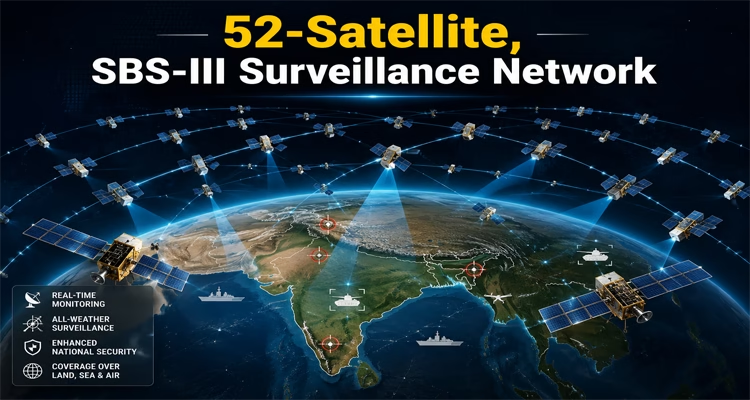
In a move that could redefine India’s military surveillance and intelligence capabilities, the Government of India has approved one of the country’s most ambitious space-defence programmes ever conceived: the Space-Based Surveillance Phase-III (SBS-III) project. With a planned constellation of 52 advanced surveillance satellites, the initiative aims to provide the Indian armed forces with near real-time monitoring of the country’s borders, maritime zones, and strategic neighbourhood.
At a time when warfare is increasingly shaped by information, intelligence, and rapid decision-making, India’s latest space programme signals a clear recognition that the next frontier of national security lies not only on land, sea, and air—but also in space.
A Strategic Leap Beyond Traditional Surveillance
For decades, military surveillance relied heavily on ground-based radars, aircraft, reconnaissance missions, and limited satellite coverage. However, modern security challenges—from cross-border military movements and drone incursions to missile launches and maritime threats—demand constant monitoring across vast geographical regions.
The SBS-III project seeks to address these challenges by creating a network of satellites capable of maintaining a persistent watch over areas of strategic interest. Once operational, the system is expected to significantly reduce the time required to detect, analyse, and respond to potential threats.
Defence experts often describe such capabilities as creating an uninterrupted “intelligence umbrella” that enables military commanders to receive critical information much faster than traditional surveillance systems.
Why 52 Satellites?
The decision to deploy as many as 52 satellites is rooted in the need for continuous coverage.
A single satellite can observe only a limited area at a given time and follows a fixed orbital path. By placing dozens of satellites in different orbits, India can dramatically increase the frequency with which strategic locations are observed, ensuring that important developments are not missed.
The satellite constellation is expected to provide:
- Continuous border monitoring
- Maritime surveillance across the Indian Ocean Region
- Tracking of military infrastructure developments
- Detection of missile launches and drone activities
- Enhanced battlefield awareness during emergencies
- Improved disaster and crisis response capabilities
The result would be a surveillance network capable of providing military planners with a far more comprehensive picture of developments across multiple theatres simultaneously.
Eyes That Can See Through Clouds and Darkness
One of the most significant aspects of the SBS-III programme is the diversity of technologies expected to be deployed.
The constellation is likely to include:
Synthetic Aperture Radar (SAR) Satellites
Unlike conventional optical satellites, SAR satellites can capture images during the night and through cloud cover. This capability is particularly valuable in regions where weather conditions often obstruct visibility.
Electro-Optical Satellites
These provide high-resolution imagery and are capable of identifying changes in terrain, infrastructure, and military deployments.
Infrared Surveillance Systems
Infrared sensors can detect heat signatures associated with missile launches, aircraft operations, and other military activities.
Signals Intelligence Satellites
These satellites help monitor electronic communications and radar emissions, contributing to broader intelligence-gathering efforts.
Together, these systems would provide a multi-layered surveillance architecture capable of monitoring activities under a variety of environmental and operational conditions.
ISRO and Private Industry Join Hands
Another notable feature of the SBS-III programme is the increasing participation of India’s private space sector.
According to available reports, approximately 21 satellites will be developed by the Indian Space Research Organisation (ISRO), while 31 satellites are expected to be built by private Indian companies.
This represents a major shift in India’s space ecosystem, where private firms are increasingly being integrated into projects of national importance.
The collaboration is expected to accelerate satellite production, encourage technological innovation, and strengthen India’s growing commercial space industry.
A Response to Emerging Security Challenges
The strategic environment around India has evolved considerably in recent years.
Rapid technological advances, growing use of drones, increasing military modernization in the region, and the expanding role of space-based assets in modern warfare have highlighted the need for enhanced situational awareness.
The SBS-III programme is expected to help India maintain closer surveillance of:
- Sensitive border regions
- Strategic maritime routes
- Military infrastructure developments in neighbouring areas
- Missile and drone activities
- Potential security threats across the broader Indo-Pacific region
Analysts view the initiative as part of a wider effort to improve India’s Intelligence, Surveillance, and Reconnaissance (ISR) capabilities and reduce dependence on external sources of strategic information.
The Cost of Strategic Awareness
The project is estimated to cost approximately ₹26,968 crore, making it one of India’s most significant investments in defence-space infrastructure.
While the financial commitment is substantial, proponents argue that the ability to detect threats early and respond more effectively could prove invaluable in protecting national interests and reducing operational risks.
In modern military strategy, information superiority is increasingly regarded as a decisive advantage. A robust surveillance network can often prevent crises from escalating by providing policymakers with accurate and timely intelligence.
Beyond Defence: Wider Benefits
Although SBS-III is primarily a security-oriented programme, many of the technologies involved may also contribute to civilian applications.
Advanced satellite systems can assist in:
- Disaster management
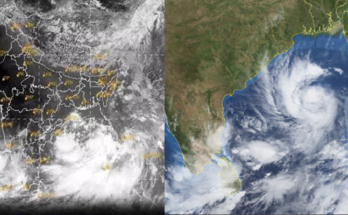
- Flood and cyclone monitoring
- Environmental observation
- Maritime safety
- Infrastructure planning
- Search-and-rescue operations
Such dual-use capabilities have become a common feature of modern space programmes worldwide.
The Future of India’s Security Architecture
The SBS-III project reflects a broader transformation in the way nations perceive security in the twenty-first century. As space becomes increasingly important for communication, navigation, intelligence, and defence, countries are investing heavily in orbital infrastructure to secure strategic advantages.
For India, the planned deployment of 52 surveillance satellites represents more than a technological achievement. It signals the country’s determination to build an indigenous, resilient, and comprehensive intelligence network capable of supporting national security objectives in an increasingly complex geopolitical environment.
If successfully implemented, SBS-III could emerge as one of the most consequential defence-space initiatives in India’s history—an ever-vigilant constellation of eyes in the sky, quietly watching over the nation’s frontiers from hundreds of kilometres above the Earth.