Internet-connected cameras expose troop movements, help identify military targets and assess attack damage; experts warn of a growing cybersecurity threat
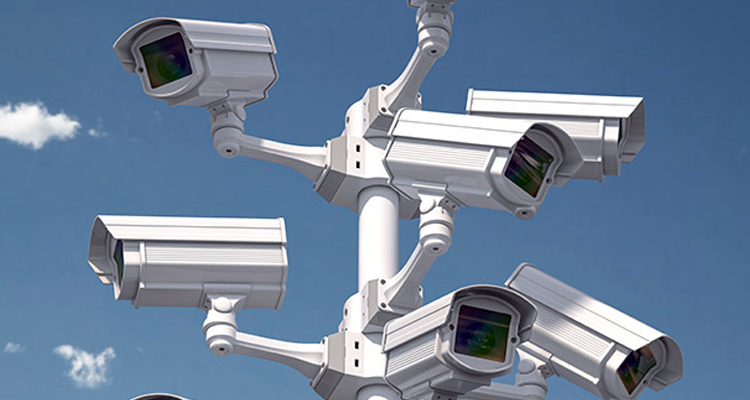
Closed-circuit television (CCTV) cameras installed to protect homes, businesses and public spaces are increasingly emerging as potential tools of military espionage, as hackers and state-linked actors exploit vulnerable internet-connected devices to monitor troop movements, identify targets and assess the damage caused by attacks.
An investigation published by The Wall Street Journal on Saturday, October 10, reported that the world has an estimated 1.2 billion internet-connected cameras, according to cybersecurity consultancy firms. These devices, ranging from residential security systems and video doorbells to traffic-monitoring cameras and baby monitors, have become a routine part of modern life. Yet their widespread deployment has also created a vast network of potential surveillance points.
The investigation highlights how cameras intended for civilian safety can be remotely accessed and repurposed for intelligence gathering, sometimes without their owners realising that their devices have been compromised.
Everyday Cameras Become Battlefield Intelligence Tools
The growing threat reflects a significant shift in modern warfare, where digital surveillance increasingly complements traditional intelligence operations. A camera positioned near a road, transport hub, bridge or military facility can provide information about the movement of personnel, vehicles and equipment.
When such footage falls into the hands of hostile actors, it may help them identify operational patterns, track military logistics, select potential targets and evaluate the results of an attack. Unlike conventional reconnaissance, remotely accessed cameras can provide continuous visual information without requiring an intelligence operative to enter a sensitive location.
The consequences can be particularly serious in active conflict zones, where even seemingly ordinary details—such as the arrival of military vehicles or changes in activity around a facility—may reveal operational information.
According to the Wall Street Journal investigation, hackers and military intelligence operators have exploited vulnerable cameras in several conflicts, including the Russia-Ukraine war and the confrontation involving Israel and Iran.
Ukraine War Illustrates the Strategic Value of Hacked Cameras
The investigation describes how camera hacking has become part of the broader intelligence contest between Russia and Ukraine.
In 2022, an international hacker group supporting Ukraine, known as Team OneFist, accessed a camera in Sevastopol, in Russian-occupied Crimea. The footage helped the group track a Russian military helicopter to a location near an airport, contributing to the identification of a previously unknown Russian air base. The intelligence was subsequently passed to Ukrainian forces.
The investigation also cited incidents in Kyiv in 2024 in which Russian hackers gained access to residential webcams. Ukraine’s security service said the intrusions were intended to help identify targets and refine missile attacks on the capital.
Ukrainian authorities have since taken steps to identify and secure cameras considered potential security risks. According to the investigation, Ukraine’s security service has identified, repositioned or blocked approximately 40,000 cameras since Russia launched its full-scale invasion in 2022.
These incidents demonstrate how civilian surveillance systems can become part of a wider intelligence network when their location and field of view offer information of military value.
Middle East Conflict Raises Further Concerns
The same risks have emerged in the Middle East, where internet-connected cameras have reportedly been exploited by opposing sides for intelligence collection.
The Wall Street Journal investigation reported that Israeli operations used Iranian traffic-camera feeds to gather intelligence, while Iranian-linked actors accessed Israeli security cameras, including devices positioned near sensitive areas.
A separate analysis published by cybersecurity firm Check Point Research on March 4, 2026, documented increased attempts to target internet-connected cameras across Israel, Qatar, Bahrain, Kuwait, the United Arab Emirates, Cyprus and Lebanon during the regional conflict.
The researchers assessed that compromised cameras could support intelligence gathering and battle-damage assessment, potentially helping attackers evaluate the effects of missile operations or identify locations for subsequent attacks.
Such findings underline the growing overlap between cyber operations and physical warfare. A digital intrusion that begins with an inadequately secured camera can potentially contribute to decisions with consequences far beyond cyberspace.
Artificial Intelligence Expands the Threat
Artificial intelligence is adding another dimension to the problem by enabling large volumes of video footage to be analysed more quickly and systematically.
Instead of relying entirely on human operators to watch camera feeds, automated systems can help identify vehicles, detect changes in activity, recognise recurring patterns and flag potentially significant events. This can make intelligence collection more scalable, particularly when hostile actors gain access to multiple cameras across a city or region.
The combination of remote access and automated analysis can turn isolated devices into a distributed surveillance network. Footage that might appear unremarkable to an individual viewer could reveal useful patterns when examined alongside other camera feeds, public information and previously collected intelligence.
However, access to a camera does not automatically guarantee accurate intelligence. Poor image quality, incorrect interpretation, outdated footage and misleading visual information can all affect the reliability of an assessment.
Weak Security Leaves Millions of Devices Exposed
A major concern is that many internet-connected cameras are installed primarily for convenience, with insufficient attention paid to their cybersecurity.
Weak passwords, unchanged factory credentials, outdated firmware, insecure remote-access settings and unpatched software can make devices vulnerable to unauthorised access. Some cameras also remain connected to the internet long after their owners stop checking for software updates or security warnings.
The US Cybersecurity and Infrastructure Security Agency (CISA) has repeatedly warned organisations about the risks associated with internet-exposed devices, including default credentials, misconfigured systems and outdated software. Its guidance recommends changing default passwords, installing security updates, replacing unsupported devices and monitoring unusual network activity.
The problem extends beyond individual households. Businesses, residential complexes, transport operators and public authorities may operate hundreds or thousands of cameras across different locations. If these devices are not included in regular cybersecurity assessments, vulnerabilities can remain undetected.
The risks are particularly significant when cameras overlook transport corridors, government buildings, industrial facilities or areas frequented by security personnel.
Implications for India
The issue has important implications for India, where CCTV networks are widely used in residential complexes, commercial establishments, transport infrastructure, educational institutions and public spaces.
Cameras positioned near sensitive installations or along routes used by security forces could potentially expose movement patterns if their feeds are accessed without authorisation. The risk is not limited to sophisticated military installations; ordinary commercial cameras may also capture information that becomes valuable when combined with other sources.
Indian businesses, housing societies and public agencies therefore need to treat camera networks as part of their broader cybersecurity infrastructure rather than as standalone security equipment.
Where cameras are installed near defence facilities or other sensitive locations, access controls, network isolation and appropriate restrictions on camera orientation may be especially important. Public authorities and organisations should also review who can access footage, where it is stored and whether remote connections are adequately protected.
How Camera Owners Can Reduce the Risk
Cybersecurity specialists recommend several practical precautions for households, businesses and institutions:
- Change default passwords: Use strong, unique credentials for every camera and its associated account.
- Install firmware updates: Keep devices updated and replace models that no longer receive security support.
- Restrict remote access: Disable internet-facing features that are not required and use secure access methods where remote monitoring is necessary.
- Enable additional authentication: Use multi-factor authentication whenever supported.
- Secure the network: Place cameras on a separate network where feasible, limiting their access to computers and other sensitive systems.
- Review camera positioning: Avoid capturing military facilities, sensitive infrastructure or restricted operational areas unnecessarily.
- Monitor unusual activity: Investigate unexpected account changes, unfamiliar logins, unexplained camera movements or suspicious network traffic.
Organisations operating large camera networks should maintain an inventory of connected devices, regularly assess their security and establish procedures for responding to suspected compromises.
A New Front in the Security Challenge
The growing exploitation of CCTV systems illustrates how the expansion of connected technology can create security vulnerabilities that extend well beyond privacy violations.
Devices once regarded as passive observers are becoming potential sources of operational intelligence. As cyber capabilities, artificial intelligence and modern warfare increasingly converge, the security of ordinary cameras may have implications for public safety, military preparedness and national security.
The central challenge is not to abandon surveillance technology, which remains valuable for crime prevention and public protection, but to ensure that the systems intended to safeguard people cannot easily be turned against them.
In an increasingly connected world, securing a camera is no longer merely a matter of protecting a household or business. In the wrong circumstances, it may also mean preventing sensitive information from reaching those who could use it to plan or intensify an attack.
Sources
- The Wall Street Journal — Video Cameras Are Everywhere—and Now They Are Being Hacked for War (October 10, 2026).
- Check Point Research — Analysis of internet-connected camera targeting during the Middle East conflict, March 4, 2026.
- Netherlands General Intelligence and Security Service (AIVD) — Cybersecurity advisory on Russian state actors compromising IP cameras, July 10, 2026.
- Cybersecurity and Infrastructure Security Agency (CISA) — Guidance on reducing exposure of internet-connected devices.