Delhi to Agra in 59 Minutes, Varanasi in 3.5 Hours: Centre Approves High-Speed Rail Corridor
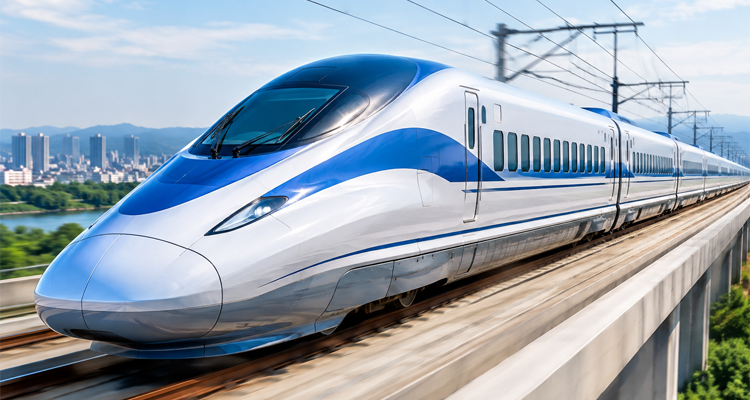
New Delhi: Travelling from Delhi to Agra in just 59 minutes and reaching Varanasi in approximately three-and-a-half hours could soon become a reality. The Centre has approved the proposed Northern Bullet Train Corridor, marking a major step towards expanding India’s high-speed rail network.
Union Railway Minister Ashwini Vaishnaw announced the development on October 31, outlining an ambitious high-speed rail network connecting Delhi with several important cities across northern, eastern and northeastern India.
The proposed corridor will connect Delhi with Agra, Kanpur, Lucknow, Ayodhya, Varanasi, Prayagraj, Patna and Siliguri before extending to Guwahati in Assam. The project is expected to significantly reduce travel time, improve regional connectivity and boost economic activities across the regions it serves.
Turn up the Volume!
🚅 Bharat’s Bullet Train is taking shape.#Bharat_BulletTrain https://t.co/Ez9FBcKYkb
— Ashwini Vaishnaw (@AshwiniVaishnaw) November 1, 2026
Delhi-Agra Journey in Just 59 Minutes
One of the most striking features of the proposed bullet train project is the dramatic reduction in travel time between major cities.
According to the Railway Minister, the Delhi-Agra journey will take just 59 minutes. Travelling from Delhi to Kanpur is expected to take approximately one hour and 45 minutes, while the journey to Lucknow could be completed in around two hours and 12 minutes.
The Delhi-Varanasi journey is projected to take approximately three hours and 33 minutes, bringing the national capital and one of India’s most important religious and cultural destinations within a few hours of each other.
Other projected journey times include:
- Delhi to Agra: 59 minutes
- Delhi to Kanpur: 1 hour 45 minutes
- Delhi to Lucknow: 2 hours 12 minutes
- Delhi to Varanasi: 3 hours 33 minutes
- Lucknow to Varanasi: 1 hour 21 minutes
- Varanasi to Prayagraj: 33 minutes
- Varanasi to Patna: Around 1 hour
- Varanasi to Agra: 2 hours 34 minutes
These are indicative journey times announced by the Railway Minister and do not represent operational train schedules.
#NewsAlert | Indian Prime Minister Narendra Modi has approved the Northern Bullet Train Corridor, a major rail connectivity project set to significantly cut travel time across North India. The high-speed rail network aims to connect Delhi to Agra in just 59 minutes, Lucknow in 2 hours, and Varanasi in approximately 3.5 hours, bringing key destinations closer and boosting regional connectivity
#BulletTrain #PMModi #IndianRailways #HighSpeedRail
— WION (@WIONews) November 1, 2026
Major Connectivity Boost for Northern and Eastern India
The proposed corridor is significant not only as a high-speed passenger railway but also as a major infrastructure initiative aimed at strengthening connectivity across several states.
By linking Delhi with major cities in Uttar Pradesh and Bihar and extending towards Siliguri and Guwahati, the project could bring northern, eastern and northeastern India closer to the national capital.
Faster rail connectivity is expected to benefit business travellers, students, professionals, tourists and patients seeking specialised healthcare. It could also provide a major boost to religious tourism, particularly by improving access to destinations such as Ayodhya, Varanasi and Prayagraj.
The proposed extension towards Siliguri and Guwahati is particularly important for eastern and northeastern India, where improved transportation infrastructure could encourage tourism, trade and investment.
Make in India to Drive Bullet Train Project
The government has emphasised indigenous manufacturing and engineering capabilities under its Make in India initiative.
According to Vaishnaw, the project will involve domestic expertise in infrastructure development, including the construction of pillars, girders and other essential components. Indian engineers, manufacturers and construction workers are expected to play a significant role.
The Railway Minister also indicated that bullet train services would not be restricted to affluent passengers. The government intends to keep fares economical and accessible to a wider section of society.
However, the final ticket prices and fare structure have not yet been announced.
Part of India’s Bigger High-Speed Rail Expansion
The Northern Bullet Train Corridor is part of India’s larger ambition to establish a nationwide high-speed railway network.
The Union Budget 2026-27 announced seven high-speed rail corridors covering nearly 4,000 kilometres, with an estimated investment potential of around ₹16 lakh crore.
The proposed Delhi-Varanasi and Varanasi-Siliguri connections are among the important corridors identified under this expansion programme.
The initiative reflects the government’s broader strategy to modernise railway infrastructure, reduce intercity travel time and develop high-speed transportation as an engine of economic growth.
Construction Timeline and Project Details Awaited
Despite the announcement of approval, several important details are yet to be finalised or publicly disclosed. These include the detailed route alignment, estimated project cost, land acquisition requirements, construction schedule and commissioning deadline.
The proposed corridor will require extensive infrastructure development, including dedicated high-speed tracks, bridges, tunnels, stations and advanced signalling systems.
The government has not yet announced a confirmed date for the commencement of commercial bullet train services on the Northern Corridor.
If implemented as envisaged, the project could fundamentally transform intercity travel across northern and eastern India. Beyond saving travel time, it could create employment opportunities, strengthen tourism, attract investment and improve access to major economic and cultural centres.
For millions of passengers, the prospect of reaching Agra from Delhi in less than an hour and Varanasi in approximately three-and-a-half hours represents a significant leap in India’s railway ambitions.