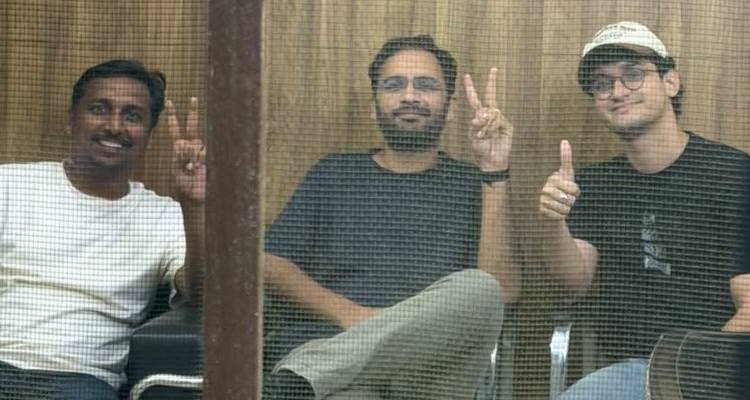
New Delhi: The protest by the Cockroach Janta Party (CJP) over restrictions on demonstrations at Delhi’s Jantar Mantar has escalated, with party leaders Ashutosh Ranka and Saurav Das being sent to five days of judicial custody and lodged in Tihar Jail on Wednesday.
The two leaders were detained by Delhi Police on Tuesday after allegedly entering the barricaded Jantar Mantar area, which had recently been removed from the list of designated protest venues. Police accused them of violating peace bonds, entering a restricted area and obstructing public servants. The activists, however, have challenged the action, alleging that the authorities are attempting to curb political dissent.
A third CJP member, Ajinkya Shinde, was released on a personal bond of ₹5,000 and directed to maintain peace and good behaviour for six months. Police also detained 11 other party members during the protest.
Tricolour, slogans and police action
According to the police account, Ranka, Das, Shinde and other CJP members reached Jantar Mantar on the morning of October 13 and allegedly entered the barricaded area through private premises, crossing security barriers and locked gates. Police personnel intervened, claiming that the protesters obstructed them from performing their official duties.
The protesters reportedly displayed the Indian national flag and raised slogans demanding the resignation of Chief Election Commissioner Gyanesh Kumar. The demonstration was linked to allegations of irregularities in the Special Intensive Revision (SIR) of electoral rolls, an issue that has triggered political controversy and protests.
Police detained 14 CJP members and registered two cases in connection with the incident. The allegations include disobedience of lawful orders, obstruction of public servants and other offences. These allegations have yet to be established in court.
CJP Leaders Saurav Das, Ashutosh Ranka Sent to Five-Day Judicial Custody https://t.co/q9EGFOmpeZ
— The Researchers (@TheResearcherss) October 14, 2026
Police cite violation of peace bonds
Ranka and Das were produced before a Special Executive Magistrate at Mandir Marg on Wednesday. Police reportedly argued that the two leaders had previously furnished bonds to maintain peace following an earlier detention but had subsequently violated the conditions.
The authorities expressed apprehension that their release could lead to further violations or disturbances. The preventive proceedings were initiated under Sections 126 and 170 of the Bharatiya Nagarik Suraksha Sanhita (BNSS), following which the magistrate ordered five days of judicial custody.
However, the defence questioned the grounds for the action, disputing the police’s apprehension that the activists might commit further offences. The legality and proportionality of the preventive action have also become points of contention.
CJP founder alleges suppression of dissent
CJP founder Abhijeet Dipke strongly criticised the custody order, describing the action as disproportionate to the nature of the protest. He alleged that the government was attempting to suppress dissent and questioned the police response to the demonstration.
The party has maintained that its protest was directed against the Election Commission and its handling of electoral-roll revision. Its supporters have questioned the severity of the action against demonstrators who, according to the party, were raising political demands while displaying the national flag.
Police, on the other hand, have defended their intervention on the grounds of alleged unauthorised entry, violation of peace bonds and the need to maintain public order.
Why Jantar Mantar has become a flashpoint
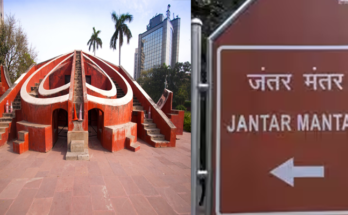
The arrests come amid a wider controversy over the removal of Jantar Mantar from the list of designated protest venues in the national capital.
On October 12, Delhi Police announced three alternative locations for demonstrations: Ramlila Maidan, Burari Ground and the Central Business District (CBD) Ground in Shahdara. The move followed a Supreme Court order dated October 9, which called on authorities to consider suitable alternative protest sites with adequate facilities while balancing public safety and the interests of residents.
The relocation has raised concerns among activists and political groups about the accessibility and visibility of demonstrations. Jantar Mantar, located close to Parliament and other important political institutions, has historically served as a prominent venue for public protests.
Critics argue that shifting demonstrations to other locations could reduce their political visibility and impact. Authorities, however, have cited the need for appropriate infrastructure, crowd management and public convenience.
Right to protest versus public order
The custody of Ranka and Das has brought the debate over peaceful assembly and the regulation of protests into sharper focus. The Constitution guarantees freedom of speech and the right to assemble peacefully, subject to reasonable restrictions imposed by law.
At the same time, authorities are empowered to regulate demonstrations to maintain public order and ensure public safety. The central question is whether the restrictions and preventive measures in this case were necessary and proportionate to the circumstances.
The controversy also highlights the growing political confrontation surrounding the Special Intensive Revision of electoral rolls and the broader debate over the Election Commission’s role.
What next? The immediate focus will be on the legal challenge to the custody order and the continuing dispute over the relocation of protests from Jantar Mantar. The action against the CJP leaders could intensify the party’s campaign against alleged electoral irregularities and restrictions on demonstrations. Whether the episode discourages further protests or gives fresh momentum to the campaign remains to be seen.