
Cyclone Arnab Weakens After Landfall, Flood and Landslide Risks Persist
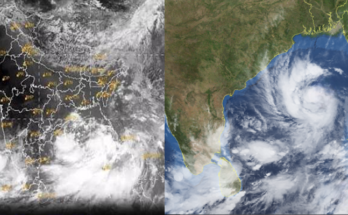
News Desk: Cyclone Arnab slammed into the Andhra Pradesh coast on Wednesday, unleashing powerful winds, torrential rain and widespread disruption. More than 1.8 lakh people were evacuated across Andhra Pradesh and neighbouring Odisha as authorities mounted emergency operations to protect vulnerable communities.
The very severe cyclonic storm crossed the coast between Bapatla and Visakhapatnam, southwest of Yanam, with sustained wind speeds of 125–135 kmph and gusts reaching 150 kmph, according to the India Meteorological Department (IMD). The landfall process was completed by 8 am.
Cyclone Weakens, but Threat Persists
Arnab weakened into a severe cyclonic storm after moving inland, but the danger remained far from over. The IMD forecast that the system would continue moving north-northwestwards and gradually lose intensity, eventually weakening into a cyclonic storm and then a deep depression.
Heavy to extremely heavy rainfall, strong winds and localised flooding remained major concerns across coastal Andhra Pradesh and parts of Odisha. Low-lying settlements, agricultural fields and vulnerable infrastructure faced the risk of further damage.
🇮🇳 🌀 Cyclone #Arnab made landfall on the southeastern coast of #India on Tuesday, with gusts measuring up to 120 km/h reported in the state of Andhra Pradesh on Wednesday.
Disaster management agencies have estimated that some 12 million people live along the #cyclone’s expected path.
— FRANCE 24 English (@France24_en) October 28, 2026
Trees Uprooted, Power Supply Disrupted
The storm battered several coastal districts, uprooting trees and electricity poles, damaging houses and roads, and disrupting power and communication networks. Waterlogging and fallen debris hampered movement in affected areas, while restoration teams worked to clear roads and repair damaged infrastructure.
Train services were cancelled or rescheduled, and flight operations were affected by the adverse weather. Schools and other institutions in vulnerable areas were also closed as a precaution.
Odisha on Alert as Rainfall Threat Intensifies
Although the cyclone made landfall in Andhra Pradesh, Odisha remained on high alert as the weather system moved inland. Southern and western districts, including Gajapati, Ganjam, Malkangiri, Koraput, Rayagada and Nabarangpur, faced warnings of heavy to extremely heavy rainfall.
Authorities evacuated residents from vulnerable areas and shifted them to safer shelters. Disaster-response teams were mobilised to deal with possible flash floods, landslides, road blockages and damage to standing crops.
Rescue and Restoration Operations Intensified
Governments in both states stepped up emergency measures, deploying disaster-response personnel and opening relief shelters. Officials prioritised the safety of residents, restoration of electricity and communication services, clearance of blocked roads and assistance to families affected by the storm.
Despite the cyclone’s weakening after landfall, continued rainfall and gusty winds remained a serious concern. Residents in vulnerable locations were urged to follow official advisories, avoid flooded roads and stay away from fallen power lines.
With Arnab moving inland, the immediate focus has shifted from coastal evacuation to damage assessment, relief operations and restoring essential services.