
Spyware, Drone Secrets and WhatsApp: How IAF Officer Was Allegedly Trapped
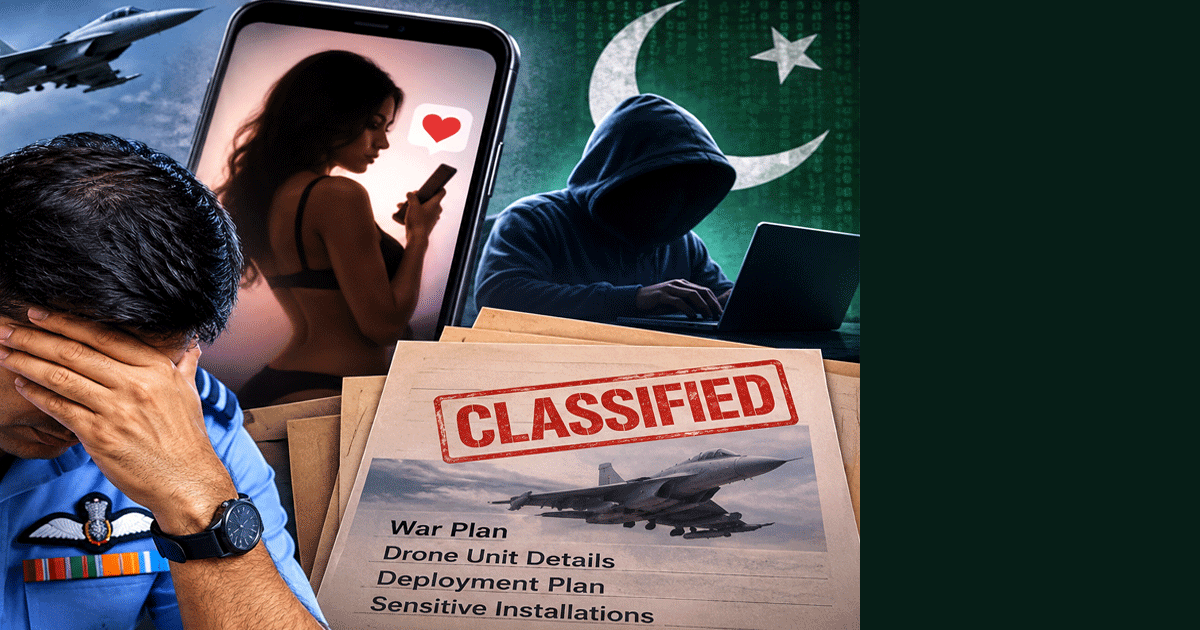
News Desk: An Indian Air Force (IAF) Wing Commander allegedly leaked classified military information to a suspected Pakistani intelligence operative in exchange for nude photographs, according to details emerging from a Delhi Police chargesheet in an espionage case.
The investigation has reportedly revealed how the officer was allegedly manipulated through a WhatsApp honey trap, with intimate exchanges used to extract sensitive defence information.
According to the chargesheet, the suspected operative sent the officer an explicit photograph, following which he allegedly shared a page from a classified IAF war plan. He reportedly offered to disclose additional pages in exchange for more photographs.
Sensitive defence information compromised
Police allege that the officer shared critical information concerning India’s military preparedness, including details of a specialised drone unit, its strength, organisational structure, operational capabilities, flight endurance and weapon-targeting systems.
The alleged disclosures also included fighter aircraft deployments in Leh, troop movements, military exercises at Rajasthan’s Mahajan Field Firing Range and coordinates of sensitive installations.
IAF officer allegedly sent classified intelligence to Pakistani spy in exchange for nude photos, chargesheet reveals
READ: https://t.co/91QmRSa065
https://t.co/91QmRSa065
— WION (@WIONews) November 13, 2026
Spyware targeting fellow officers
The chargesheet further alleges that the officer was asked to install malware and spyware to gain access to confidential military information. Investigators claim he facilitated the installation of such applications on the devices of five subordinate officers, potentially exposing sensitive communications within the Air Force.
Thousands of digital exchanges uncovered
Investigators reportedly recovered extensive digital evidence, including 3,008 text messages, 65 photographs, 65 reactions, 42 voice calls, four video calls and six URLs exchanged during communications with the suspected operative.
The officer was allegedly in contact with the operative between January 12 and April 1, 2026. Police claim the disclosures could have exposed critical operational details and compromised national security.
He was arrested on May 30, 2026, under the Official Secrets Act. The chargesheet was filed on July 30, and he remains in judicial custody.
The case has raised serious concerns over the vulnerability of defence personnel to digital honey-trap operations and the potential use of intimate relationships by hostile intelligence agencies to extract classified information.
The allegations are yet to be established in court.