
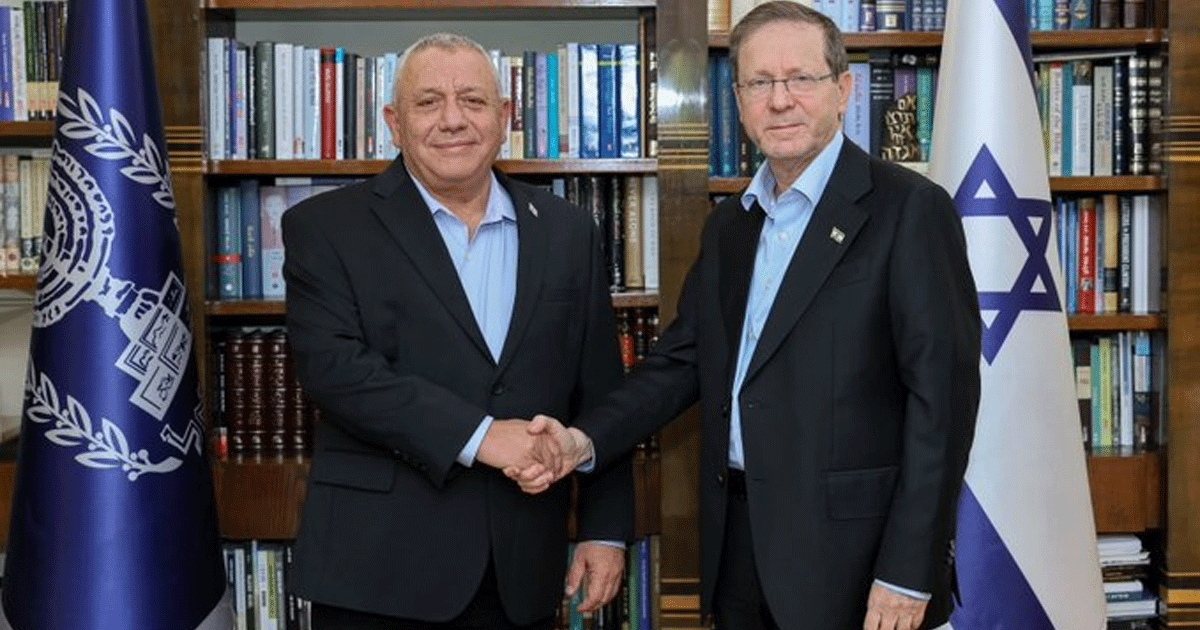
Gadi Eisenkot Gets 28 Days to Form Israel Government as Netanyahu Loses Majority
News Desk: Israeli President Isaac Herzog has reportedly chosen former Israel Defence Forces (IDF) chief Gadi Eisenkot to form the country’s next government, opening a fresh chapter in Israel’s political battle and posing a major challenge to Prime Minister Benjamin Netanyahu.
The development follows the October 27 general election, which left Netanyahu’s ruling right-wing and religious coalition short of a parliamentary majority. Eisenkot’s selection comes after consultations between the president and representatives of political parties elected to the 120-member Knesset.
According to the reported figures, 67 lawmakers backed Eisenkot for the mandate, while 46 supported Netanyahu. Seven lawmakers did not recommend either candidate.
Although Netanyahu’s Likud emerged as the largest single party with 27 seats, the broader opposition alliance secured greater combined support. Eisenkot’s Yashar party reportedly won 21 seats, while his wider political alliance secured 48 seats.
28 Days to Form Government
Eisenkot will have an initial period of 28 days to negotiate with political parties and secure the support required to form a government. The president may grant an additional 14 days if negotiations require more time.
Under Israel’s parliamentary system, a government needs the support of at least 61 members in the 120-seat Knesset.
However, securing a majority will not be easy. Eisenkot faces the challenge of bringing together parties with differing political, ideological and religious positions. Cooperation with Arab-led parties and ultra-Orthodox factions could prove particularly complicated.
זו העת להקמת ממשלת חירום לאומית.
אעשה הכל כדי שנהיה ראויים 🇮🇱 https://t.co/18Q3eIE6g0— Gadi Eisenkot – גדי איזנקוט (@gadi_eisenkot) November 7, 2026
Coalition Challenges Ahead
One of the major disagreements concerns compulsory military service. Eisenkot and several of his political allies have advocated reforms to military-service exemptions, while ultra-Orthodox parties have traditionally opposed changes to the existing arrangements.
The position of Arab-led parties could also prove decisive in coalition negotiations. Their parliamentary strength may help the opposition camp reach the required majority, although differences over security and other national issues could complicate cooperation.
Netanyahu Seeks Unity Government
Following the reported decision, Netanyahu renewed his appeal for a national unity government, arguing that Israel needs political stability amid continuing security challenges.
However, the political differences between Netanyahu and Eisenkot remain significant. Eisenkot has criticised the government’s handling of the Gaza war and opposed the influence of far-right coalition partners, including Itamar Ben-Gvir and Bezalel Smotrich.
The possibility of a unity arrangement therefore remains uncertain.
Who Is Gadi Eisenkot?
Gadi Eisenkot served as Chief of Staff of the Israel Defense Forces from 2015 to 2019. He entered politics in 2022 and gradually emerged as one of Netanyahu’s prominent political challengers.
Following the Hamas-led October 7, 2023, attack on Israel, Eisenkot also served as an observer in Netanyahu’s wartime cabinet.
His political agenda has focused on national security, military-service reforms and government accountability.
Fresh Elections Remain a Possibility
If Eisenkot fails to assemble a coalition within the prescribed period, President Herzog could give another lawmaker an opportunity to form a government. If subsequent attempts also fail, Israel could face another parliamentary election.
For Netanyahu, the reported development represents a significant challenge to his political leadership. For Eisenkot, the immediate task is to convert parliamentary support into a functioning coalition.
The coming weeks will therefore be crucial in determining Israel’s political direction and whether the country enters a new phase of government leadership or heads towards another election.