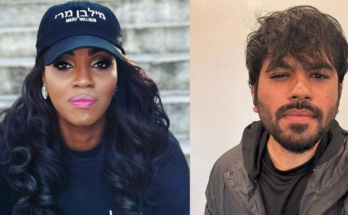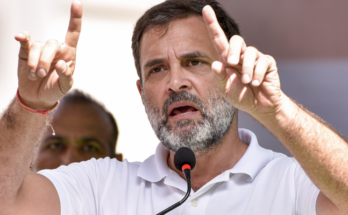

by Ashis Sinha
Neha Bora’s praise for Bangladesh’s Gen Z movement sparks a political storm as the BJP alleges a regime-change agenda linked to youth protests in India.
New Delhi: A fresh political controversy has erupted in India after All India Students’ Association (AISA) president Neha Bora praised Bangladesh’s Gen Z movement, saying it had shown young people in India the way to organise around democratic and voting rights. Her remarks have drawn a sharp response from the Bharatiya Janata Party (BJP), which has accused the opposition of pursuing a “regime-change” agenda by seeking inspiration from the political upheaval that led to the fall of Sheikh Hasina’s government in Bangladesh in 2024.
The controversy has intensified the political confrontation over youth-led protests, electoral transparency and the role of opposition parties in India. While the BJP has portrayed Bora’s remarks as evidence of a wider political objective, the opposition’s position centres on the right to protest and raise questions about democratic institutions.
‘Bangladesh Showed Us the Way’: What Neha Bora Said
Bora reportedly made the remarks in a video message on October 14, addressed to the sixth national conference of Bangladesh’s Socialist Students’ Front. She expressed solidarity with Bangladeshi student activists and praised the country’s Gen Z movement, suggesting that its experience could inspire young people in India.
She also referred to democratic and voting rights, resistance to religious fundamentalism and the possibility of greater cooperation between young people in India and Bangladesh.
Her comments have attracted particular attention because they came amid youth-led protests in India over electoral issues and demands for the resignation of Chief Election Commissioner Gyanesh Kumar.
Bora’s supporters may view her statement as an expression of solidarity with student activism and democratic rights. However, the BJP has interpreted the comparison with Bangladesh as an indication that some opposition-linked activists want to reproduce the political upheaval witnessed in the neighbouring country.
The distinction between drawing inspiration from a protest movement and advocating the overthrow of a government has consequently become central to the controversy.
नेहा बोरा के लिए बांग्लादेश की क्रांति आदर्श है तो सवाल उठना लाजिमी है—क्या भारत में भी वैसी ही अराजकता और हिंसा चाहती हैं? पर राहुल गांधी उसके कंधे पर हाथ रखकर उसे प्रोत्साहित करने का काम कर रहे हैं कांग्रेस पार्टी उसके समर्थन में और तो और काकरोच जनता पार्टी के संस्थापक और नेताओं के भड़काऊ बयानों की भी जांच हो। देश को बरगलाने, हिंसा भड़काने या दंगे की साजिश के सबूत मिलें तो सभी पर मुकदमा दर्ज कर कठोर कानूनी कार्रवाई होनी चाहिए। देश में क्रांति के नाम पर अराजकता नहीं चलेगी!
— Subhash Rattanpal (जनतंत्र टीवी) (@subhashrattanpa) October 15, 2026
BJP Alleges ‘Regime-Change Agenda’
The BJP launched a sharp attack following the circulation of Bora’s video message. Party spokesperson Pradeep Bhandari accused the opposition of seeking to replicate in India the political developments that culminated in Hasina’s departure from power.
Bhandari linked Bora’s remarks to Rahul Gandhi and the broader opposition camp, alleging that the objective extended beyond ordinary political opposition and amounted to an attempt at regime change.
The BJP has argued that the comparison with Bangladesh raises questions about the intentions behind youth mobilisation and protests directed at constitutional institutions.
The ruling party has also sought to connect the controversy with allegations of electoral irregularities raised by opposition leaders and activists.
However, the allegation of a coordinated regime-change plan remains a political claim. Praising a student movement or expressing solidarity with demands for democratic rights does not, by itself, establish an intention to overthrow a government. Any such conclusion would require evidence beyond political interpretations of a public statement.
Opposition Rejects Attempts to Discredit Democratic Protest
The controversy has also exposed the growing divide between the BJP and opposition parties over the meaning and limits of political dissent.
Opposition voices have criticised the ruling party’s approach, arguing that raising questions about electoral transparency and defending democratic rights are legitimate activities in a democracy.
The dispute reflects two competing political narratives. The BJP views Bora’s remarks as a reason to question the objectives of the protest movement, while those supporting the demonstrations maintain that youth participation and criticism of public institutions are essential to democratic accountability.
At the same time, the political debate has raised questions about the language used by activists when referring to movements that have resulted in the removal of governments in other countries.
The central issue is whether Bora was expressing solidarity with student-led demands or advocating a political strategy modelled on Bangladesh’s upheaval. The available public statements do not, on their own, establish the latter.
How Bangladesh’s Gen Z Movement Changed the Political Landscape
Bangladesh’s Gen Z movement became a decisive political force in 2024. What began as student protests against the government job-quota system gradually expanded into a nationwide uprising against Sheikh Hasina’s government.
The unrest escalated amid violent clashes, deaths and growing public anger. On August 5, 2024, Hasina left office and departed Bangladesh, ending her long tenure as prime minister.
The events demonstrated how student mobilisation could combine with wider public grievances and political discontent to produce a dramatic change in government.
For young activists elsewhere, the movement became an example of the power of collective action. However, the upheaval also highlighted the risks associated with prolonged confrontation, including loss of life, violence and institutional instability.
Bangladesh’s experience therefore offers a complex lesson. Mass movements can bring previously marginalised concerns into the political mainstream, but their consequences depend on the circumstances in which they develop and the methods employed by those involved.
Comparisons with India must also take into account the differences between the two countries’ political environments, constitutional institutions and specific circumstances.
India’s Youth Protests Add to the Political Tension
Bora’s remarks have assumed greater significance because of her role in student politics and youth-led mobilisation.
Protests in India have raised concerns about electoral processes, voter-list management and the accountability of constitutional institutions. Activists have demanded greater transparency and questioned the functioning of the electoral system, while the Election Commission has defended its procedures.
The BJP has rejected allegations of electoral manipulation, and the opposition has continued to press for answers to its concerns.
These disagreements have contributed to a wider political debate about public confidence in elections, the responsibilities of the Election Commission and the right of citizens to question institutions.
Against this backdrop, Bora’s praise for Bangladesh’s Gen Z movement has provided the BJP with an opportunity to challenge the motives of opposition-linked activists.
Yet the political significance of the remarks should not be confused with proof of a coordinated plan to destabilise the government. Such allegations require independent evidence and cannot be established merely by drawing parallels between two protest movements.
Inspiration or Regime Change? The Question at the Centre of the Row
The controversy ultimately centres on the difference between taking inspiration from a movement abroad and seeking to reproduce the circumstances that brought down another country’s government.
Political movements frequently draw lessons from events in other countries. Student protests, campaigns for electoral reform and demonstrations against government policies can influence activists across national boundaries. Such exchanges are not unusual in democratic politics.
However, praising a movement that culminated in the removal of a government can become politically contentious, particularly when similar protests are taking place at home.
The BJP has used Bora’s remarks to question the opposition’s intentions and connect her activism with Rahul Gandhi. But a clear distinction must be maintained between her reported statements, the BJP’s interpretation and evidence supporting the allegations.
The available information does not independently establish that Bora or the Congress leadership is pursuing a coordinated plan to bring about regime change in India on the Bangladesh model.
What Next?
The controversy is likely to deepen the political confrontation over electoral integrity, youth activism and the role of opposition parties. The BJP may continue to use Bora’s remarks to question the objectives of the protest movement, while opposition voices are likely to argue that criticism of the government and solidarity with student movements should not automatically be portrayed as anti-democratic activity.
Further clarification from Bora and AISA could help establish the precise intent behind the remarks. Any broader allegations of a regime-change strategy would need to be assessed on the basis of evidence rather than political rhetoric.
The episode raises a larger question for Indian democracy: When does inspiration from a popular movement become a perceived threat to political stability, and who gets to define that boundary?
Ultimately, the answer must rest on facts, the methods advocated by those involved and their commitment to constitutional processes—not merely on competing political accusations.