News Desk: US President Donald Trump has renewed his threat to strike Iran’s heavily fortified Pickaxe Mountain nuclear-linked facility, warning that American forces could destroy the site rapidly if Washington decides to take further military action against Tehran’s nuclear infrastructure.
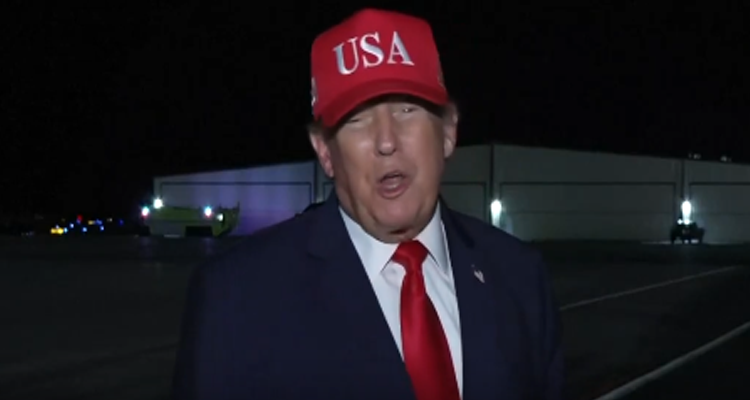
“We may have to go there. We’ll take a shot at that one. We’ll knock it out fast,” Trump reportedly said during an interview with Newsmax, signalling that the United States has not ruled out additional strikes against Iran’s underground nuclear facilities.
The warning has drawn attention to Pickaxe Mountain, a strategically sensitive site whose deep underground location presents a significant challenge for any military operation. Although the United States has previously targeted Iranian nuclear infrastructure, the mountain facility has remained a particular concern because of its extensive underground construction.
US May Target Iran’s Pickaxe Mountain Nuclear Site; Trump Vows ‘We’ll Knock It Out Fast’ https://t.co/vd3r2vVSDE
— The Researchers (@TheResearcherss) October 16, 2026
Pickaxe Mountain: A Difficult Target
Located near Natanz, one of Iran’s principal nuclear facilities, Pickaxe Mountain—also known as Kuh-e Kolang or Mount Kolang—is believed to house an extensive network of tunnels and underground structures.
Iran has described the project as a facility associated with assembling advanced uranium-enrichment centrifuges. However, its precise operational status and the full extent of activities taking place inside remain uncertain.
The complex is believed to be buried deep beneath the mountain, potentially offering substantial protection against conventional air strikes. Its underground design has raised questions about whether an attack could destroy the facility’s most deeply buried sections or merely damage its entrances and supporting infrastructure.
Trump Reiterates Warning Over Iran’s Nuclear Ambitions
Trump has repeatedly maintained that Iran must not be allowed to acquire nuclear weapons. His latest remarks suggest that Washington remains prepared to consider further military action if it believes Tehran is rebuilding or advancing its nuclear capabilities.
The US president has also indicated that he does not want to deploy American ground troops into Iran, favouring military options that would avoid a full-scale ground invasion.
However, Trump has not publicly confirmed a final decision to attack Pickaxe Mountain or announced a specific timetable for any potential operation.
‘Mother of All Bombs’ Raises Questions
The possibility of using powerful conventional weapons against Iran’s deeply buried installations has also attracted attention. Among the weapons discussed in connection with potential military options is the GBU-43/B Massive Ordnance Air Blast bomb, widely known as the “Mother of All Bombs”.
Despite its enormous explosive power, the weapon is not specifically designed to penetrate deeply buried, hardened underground facilities. Its effectiveness against a complex concealed beneath a substantial mass of rock would therefore be uncertain.
Destroying the surface infrastructure or blocking tunnel entrances would not necessarily mean that the entire underground installation had been eliminated. The outcome of any strike would depend on the facility’s construction, the weapons employed and the vulnerability of its individual components.
Middle East Faces Fresh Escalation Risk
A US attack on Pickaxe Mountain could open another dangerous chapter in the confrontation between Washington and Tehran. Iran could retaliate against American forces or regional interests, potentially widening the conflict and increasing instability across the Middle East.
Any escalation could also affect global energy markets and shipping through the Strait of Hormuz, one of the world’s most important routes for oil and gas transportation.
For Washington, the challenge would be to demonstrate that Iran’s nuclear capabilities had been significantly weakened without triggering a broader regional war. For Tehran, the threat of another strike could intensify concerns over the security of its nuclear infrastructure and its ability to deter further attacks.
Will a Strike Eliminate the Threat?
Trump’s latest warning has once again placed Iran’s underground nuclear infrastructure at the centre of the international security debate. Yet the fundamental military question remains unresolved: can conventional weapons destroy a facility buried deep inside a mountain, or would an attack merely damage parts of the complex while leaving its most protected sections intact?
For now, Trump’s remarks indicate the possibility of further military action, not confirmation that an attack has been authorised.
The coming developments will determine whether the warning becomes a military operation or another attempt by Washington to pressure Tehran over its nuclear ambitions. Either way, any strike against Pickaxe Mountain could carry consequences far beyond the facility itself, potentially reshaping the security calculations of the entire region.