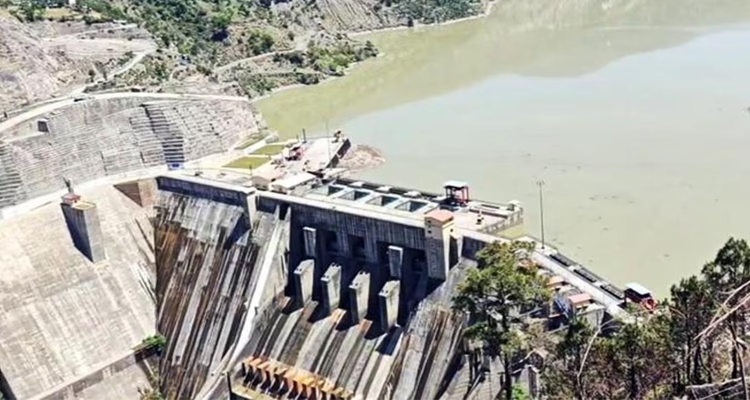
New Delhi: In a strategic move, India has begun flushing operations at two of its key run-of-the-river hydroelectric projects—Baglihar and Salal—located on the Chenab River in Jammu and Kashmir. The operation, initiated over the weekend, is expected to significantly reduce water flow downstream to Pakistan during a crucial agricultural season.
Flushing, a technique used to clear silt and sediment build-up in dam reservoirs by releasing high volumes of water, is being carried out at the 900 MW Baglihar project in Ramban and the 690 MW Salal project in Reasi district. A senior government official confirmed that the process may take up to two weeks to complete, during which the downstream water flow into Pakistan will be temporarily disrupted.
The reduced flow is likely to affect the Marala Barrage in Pakistan’s Punjab province, limiting irrigation water availability just as the sowing season for kharif crops like paddy, maize, and cotton begins.
Though Baglihar and Salal are run-of-the-river projects with limited storage capacity, the timing of the flushing—outside the Indus Water Treaty (IWT)-mandated August window—marks a notable shift. With the IWT currently suspended following the deadly April 22 terror attack in Pahalgam that killed 26 people, India now has the flexibility to manage water releases from western rivers, including Indus, Chenab, and Jhelum.
Sources suggest this action is part of a broader set of punitive measures in response to Pakistan’s suspected involvement in the Pahalgam attack. Without regular flushing, sediment buildup can compromise dam efficiency—making this both an operational and strategic decision.
As tensions rise, the move underscores India’s increasing willingness to leverage water management as a tool of geopolitical pressure.