
-
K-9 Vajra Fleet Set to Cross 500 Guns After ₹23,000-Crore Proposal
-
Expansion Sharpens Artillery Edge Against China, Pakistan
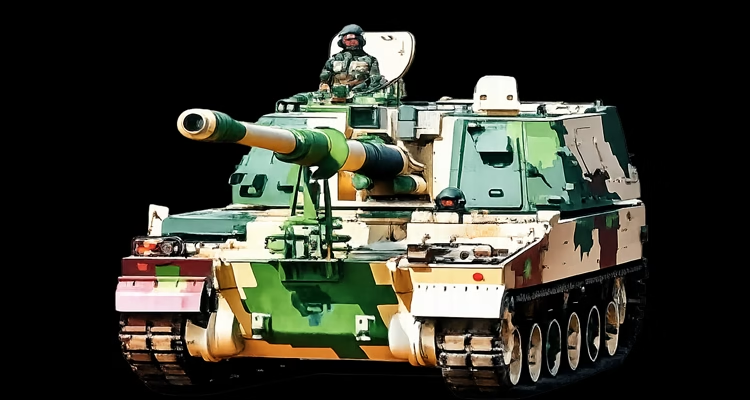
New Delhi: The Indian Army is preparing for a major leap in its artillery modernization programme, with plans to acquire more than 300 additional K-9 Vajra self-propelled howitzers in a deal estimated at around ₹23,000 crore. The proposal is expected to come up for consideration before the Defence Procurement Board soon, potentially paving the way for one of the largest artillery purchases in the country’s recent military history.
The move comes as India continues to strengthen its combat readiness amid evolving security challenges along both the northern and western borders. Military planners view long-range, mobile artillery as a key element of future battlefield operations, particularly in high-intensity conflict scenarios.
Building a Larger Artillery Force
If approved, the fresh procurement will significantly expand the Army’s existing K-9 Vajra fleet, taking the total number of these advanced guns in service and on order beyond the 500-mark. Such an expansion would considerably enhance the Army’s ability to deliver rapid and sustained firepower across multiple operational theatres.
The planned acquisition reflects the growing importance of self-propelled artillery systems, which combine firepower, mobility and survivability in a single platform.
Indigenous Manufacturing to Take Centre Stage
The guns are expected to be produced domestically by Larsen & Toubro (L&T), which manufactures the K-9 Vajra in India under a partnership with South Korean defence major Hanwha Aerospace.
The project is likely to further deepen indigenous manufacturing in the defence sector. Officials believe the new order could see higher localisation levels than previous contracts, supporting the government’s efforts to build a stronger domestic defence industrial base.
A Battle-Proven Platform
The K-9 Vajra is a tracked 155mm/52-calibre artillery system capable of striking targets at distances exceeding 40 kilometres. Over the years, it has evolved into one of the Army’s most trusted long-range fire support assets.
India first inducted the platform after placing an order for 100 units in 2017. Initially intended for deployment in desert sectors, the guns were stationed in western operational areas where their speed and firepower proved highly effective.
The platform’s role expanded dramatically after the military standoff with China in Eastern Ladakh. Modified for extreme weather conditions, the K-9 successfully demonstrated its capability to operate in high-altitude terrain and freezing temperatures, prompting the Army to deploy the system in mountainous regions as well.
Its strong performance led to a follow-on order in 2023, further cementing its position within India’s artillery arsenal.
Mobility That Changes the Battlefield
A defining feature of the K-9 Vajra is its ability to fire and relocate within minutes. This “shoot-and-move” capability allows the system to strike targets quickly before shifting positions, reducing the risk of detection and retaliation by enemy artillery.
Combined with armoured protection for its crew and advanced fire-control systems, the platform offers a potent blend of precision, protection and battlefield mobility.
Enhancing Readiness on Multiple Fronts
Defence analysts believe the proposed expansion of the K-9 fleet will provide the Army with greater operational flexibility across diverse terrains—from deserts and plains to mountainous border regions.
As India continues to modernise its armed forces, the induction of hundreds of additional self-propelled howitzers would represent a significant enhancement of its long-range strike capabilities, strengthening deterrence and improving readiness to respond to future security challenges.