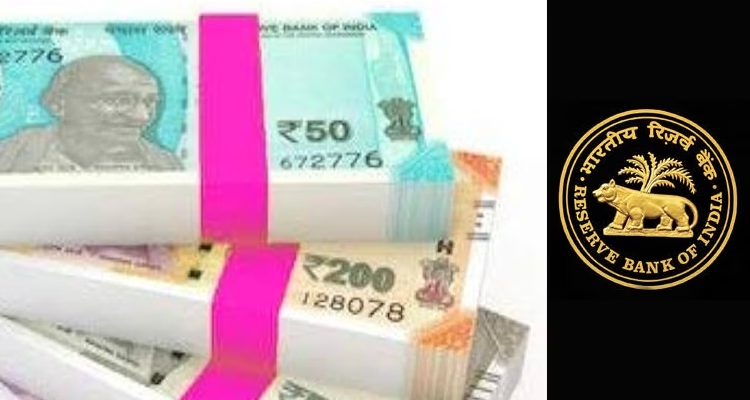
New Delhi | India: India could soon witness a major transformation in its currency system, with the Reserve Bank of India (RBI) reportedly reviving plans to introduce polymer, or plastic, currency notes in circulation. The move is aimed at improving the durability of banknotes, reducing printing costs over the long term, and strengthening protection against counterfeiting.
According to recent reports, the proposal to introduce polymer banknotes was discussed during recent RBI board meetings, with officials considering a pilot project for public circulation in the near future. The renewed push comes amid rising demand for currency notes and growing concerns over the short lifespan of conventional paper-based banknotes.
Polymer notes are made from a special type of plastic substrate rather than cotton-based paper. These notes are widely used in countries such as Australia, Canada, New Zealand, Vietnam, and Romania due to their longer lifespan, improved cleanliness, and advanced security features. Experts say polymer notes can last several times longer than traditional paper notes and are significantly more difficult to counterfeit.
India’s interest in plastic currency is not new. The RBI and the Government of India had first explored the idea more than a decade ago. In 2012, the government approved a field trial involving one billion ₹10 polymer notes across five cities — Kochi, Mysuru, Jaipur, Bhubaneswar, and Shimla — chosen for their diverse climatic conditions. However, the project did not move forward on a large scale due to technical and operational concerns.
The government had also informed Parliament in 2016 that a decision had been taken to print polymer-based currency notes and that procurement of the required material had begun. Despite those announcements, plastic notes never entered mainstream circulation.
Reports suggest that the RBI is once again examining the advantages of polymer notes, particularly their longer shelf life and reduced replacement costs. Lower-denomination notes, which typically wear out quickly due to frequent handling, could be among the first candidates for the transition.
Supporters of polymer currency argue that the notes remain cleaner, are water-resistant, and contain sophisticated security features such as transparent windows and specialized inks that make duplication more difficult. These benefits could help the RBI reduce the circulation of fake currency while improving the overall quality of banknotes.
However, the proposal has also faced criticism in the past. Some experts have raised concerns about the performance of polymer notes in India’s extreme weather conditions, particularly high temperatures. Environmental and manufacturing-related questions have also been debated during previous evaluations.
While the RBI has not yet made a formal announcement regarding the launch date or denominations of the proposed polymer notes, the revival of discussions indicates that India could be closer than ever to joining the growing list of countries using plastic currency. If approved, the move would mark one of the most significant changes to India’s currency system since the introduction of the Mahatma Gandhi New Series banknotes.