First commercial consignment around 12,000 litres sent to Haldia; two wells operational, 5–6 more planned as ONGC looks to raise output
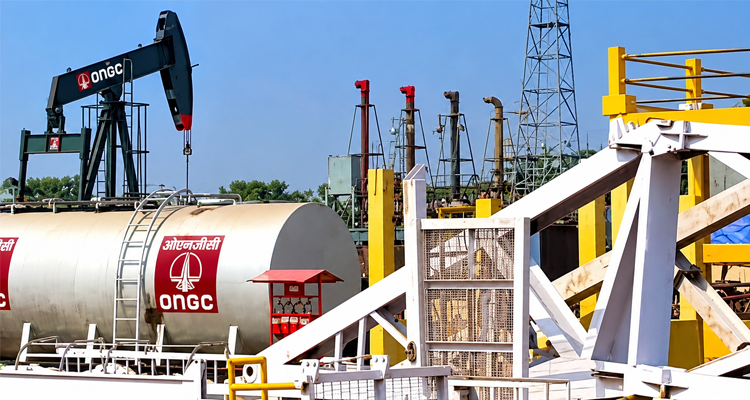
Kolkata: West Bengal’s long-awaited oil story has finally moved from discovery to commercial production. Oil and Natural Gas Corporation (ONGC) has started commercial crude-oil production at its Baigachhi field in Ashoknagar, North 24 Parganas, marking a significant milestone for the state’s energy sector.
The first commercial consignment of crude was dispatched from Ashoknagar to Indian Oil Corporation’s Haldia refinery on August 28, 2026, turning a discovery made years ago into a producing oilfield.
For West Bengal, the significance goes beyond the volume of crude currently being produced. Ashoknagar could become the starting point for a wider oil-and-gas services, engineering, logistics and employment ecosystem in the region.
Commercial production finally begins
According to reports quoting ONGC officials, the Ashoknagar field is currently producing around 20 cubic metres, or approximately 20,000 litres, of crude oil a day.
Two wells are presently operational, while ONGC is preparing to drill another five to six wells as it works to expand production.
The first commercial consignment was around 12,000 litres, transported by tanker to Haldia.
The crude reportedly has an API gravity of around 40–41, placing it in the category of relatively light crude and drawing comparisons with Mumbai High crude.
#ONGC’s first commercial hydrocarbon discovery in the Bengal Basin at Ashoknagar has moved a decisive step closer to monetisation.
In less than three months since the spudding of development well AS-1Z on 30 May 2026, ONGC successfully established the flow potential of light,… pic.twitter.com/zSpY5l78Sc
— Oil and Natural Gas Corporation Limited (ONGC) (@ONGC_) August 28, 2026
From 2018 discovery to 2026 production
Ashoknagar’s oil journey began with the discovery of oil and gas in 2018.
The road to commercial production, however, has been far from smooth. Appraisal work, technical challenges, the Covid-19 disruption and land-related issues slowed the project.
Experimental production had already taken place earlier. In 2020, an initial well reportedly produced around 375 barrels of oil, demonstrating the field’s potential.
The latest development represents a decisive shift: Ashoknagar is no longer merely an oil discovery—it is now a commercial producing field.
How much oil does Ashoknagar have?
The exact size of Ashoknagar’s commercially recoverable oil reserves has not yet been officially established in a definitive public assessment, sources said. Various reports have referred to substantial hydrocarbon potential in the wider Bengal Basin, including estimates of around 240 million barrels of oil equivalent in place. However, this figure should not be described as Ashoknagar’s proven or commercially recoverable reserves, sources said.
“The total oil present underground, estimated resources and economically recoverable reserves are different measurements,” sources said. The final recoverable reserve potential of Ashoknagar will depend on further drilling, reservoir appraisal, recovery rates, production performance and field-development studies, they said.
ONGC has indicated that further exploration has pointed to greater hydrocarbon potential in the Ashoknagar area than initially anticipated, sources said. With commercial production now under way and additional wells planned, further appraisal is expected to provide a clearer picture of the field’s recoverable potential.
For now, the widely cited 240-million-barrel figure should be attributed to the wider Bengal Basin and not presented as Ashoknagar’s confirmed recoverable reserves, sources said. Any specific reserve figure for Ashoknagar should be quoted only after an updated official assessment by ONGC or the Government of India.
West Bengal government’s role
While ONGC is leading the development, the West Bengal government has an important role in enabling the project’s expansion.
Land, local administration, infrastructure, inter-agency coordination and community engagement are crucial to the smooth development of additional wells and surface facilities.
Land-related complications had previously contributed to delays. Their resolution is therefore significant for ONGC’s plans to expand production.
The state now has an opportunity to go beyond facilitating oil extraction and build an economic ecosystem around the project.
Jobs could be the bigger story
The number of direct jobs created by an oilfield may be relatively modest, but the wider supply chain can generate opportunities in:
- engineering and fabrication;
- mechanical and electrical maintenance;
- drilling services;
- transportation and logistics;
- safety and technical services;
- equipment supply;
- local contracting.
A targeted skill-development programme involving ITIs and technical institutions could help local youth capture a larger share of these opportunities.
From Ashoknagar to Haldia
The link between Ashoknagar and Haldia refinery gives the project an added strategic dimension.
Crude produced in North 24 Parganas can enter the state’s existing petroleum-processing infrastructure, creating a direct connection between the newly developed oilfield and one of eastern India’s major industrial hubs.
If production increases significantly, this could generate additional demand for transportation, storage and related energy infrastructure.
A test for the Bengal Basin
Ashoknagar’s success could have implications well beyond the field itself.
The project is located within the broader Bengal Basin, and sustained commercial production could encourage further exploration and investment in promising areas of the basin.
For West Bengal, this could mean the emergence of a new cluster of petroleum-related technical and industrial activity.
For India, every additional domestic source of crude has strategic value as the country continues to rely heavily on imports to meet its oil requirements.
Environmental safeguards remain critical
The opportunity also comes with challenges.
Ashoknagar is located in a populated region where oil operations must coexist with residential areas, agriculture and existing infrastructure.
Groundwater protection, drilling-waste management, spill prevention, emissions control, land use and safe transportation of crude will therefore require strict oversight.
For the project to retain public support, local communities must see tangible benefits while environmental safeguards remain non-negotiable.
The road ahead
Ashoknagar will not make West Bengal an oil giant overnight, and its current production is small compared with India’s overall crude requirement.
But its importance lies elsewhere.
A discovery made in 2018 has now become a producing field in 2026. With two wells already operating and another five to six planned, the next phase will determine how much further Ashoknagar can scale.
The real opportunity for West Bengal is to ensure that the benefits extend beyond the oil wells—into jobs, skills, local businesses, infrastructure and new exploration.