by Prof. (Dr.) Manmohan Prakash
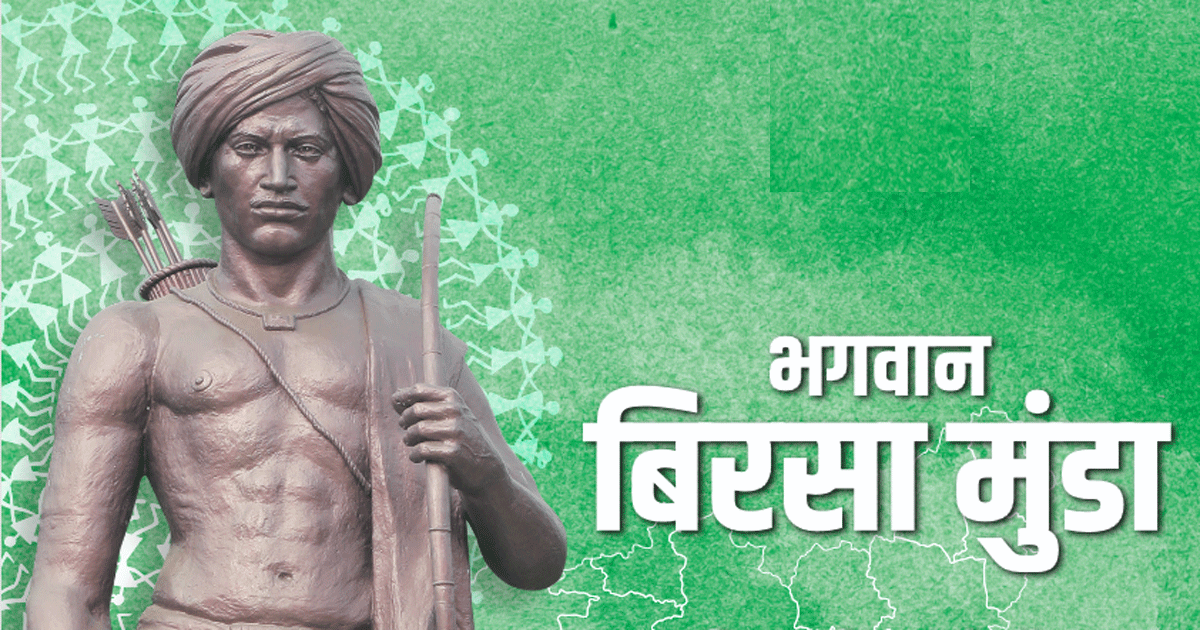
The history of India’s freedom movement is not merely the story of liberation from British rule; it is also a saga of courage, self-respect, sacrifice and the struggle of great national heroes who awakened a new consciousness in society. Bhagwan Birsa Munda was one such extraordinary leader who united tribal communities against exploitation, injustice and oppression, giving them a renewed sense of freedom, dignity and cultural identity. His life, ideals and contributions continue to inspire Indians, particularly the younger generations.
Born on 15 November 1875 in Ulihatu village, in present-day Jharkhand, Birsa Munda grew up in extremely humble circumstances. From an early age, he displayed remarkable curiosity, leadership qualities and an uncompromising stand against injustice. He witnessed firsthand the poverty of his community, the practice of forced labour, the encroachment upon tribal lands and the atrocities committed under British rule and exploitative systems. These experiences shaped his determination to bring about social transformation and safeguard the rights and dignity of his people.
The most remarkable aspect of Birsa Munda’s personality was his indomitable courage and unwavering determination to challenge injustice. He stood against British colonial rule as well as the exploitative social and economic structures that oppressed tribal communities. His struggle was not merely directed against political authority; it was also a movement to protect the traditional rights of tribal people over their Jal, Jangal aur Zameen (water, forests and land). The Ulgulan (Great Rebellion) of 1899–1900 remains a historic testament to his courage, organisational abilities and extraordinary power to mobilise and awaken the masses.
Another defining aspect of his personality was his deep sense of cultural pride and commitment to social reform. He encouraged the Munda community to preserve its traditions, cultural identity and collective values. He urged people to reject social evils, superstitions and alcoholism and embrace a clean, disciplined and ethical way of life. He firmly believed that the true strength of any society lies in unity, self-respect and collective awareness.
His leadership was equally exceptional. He brought together scattered tribal communities and transformed them into a united force capable of organised resistance. His movement was not driven by personal ambition but by a commitment to protecting the rights, dignity and future of his people. He demonstrated that even in the face of limited resources, unwavering determination, clarity of purpose and collective resolve can lay the foundation for far-reaching social change.
Sacrifice, dedication and selfless service were other defining features of his character. He placed the interests of his community above his personal comfort and aspirations. The British authorities arrested him, and he died in Ranchi Jail on 9 June 1900, at the young age of just 25. However, his struggle was not in vain. His movement brought the issue of tribal land rights into wider public consciousness and contributed to the historical developments that eventually led to stronger legal safeguards for tribal land, including the Chotanagpur Tenancy Act, 1908 (CNT Act).
At a time when society continues to confront numerous challenges, Birsa Munda’s life offers timeless lessons. It inspires us to stand firm against injustice, respect our culture and identity, challenge social evils and remain committed to the welfare of the collective. His life teaches us that greatness is not determined by age, position, resources, caste, religion or language. Rather, it is defined by the strength of one’s convictions, integrity of character and the lasting significance of one’s actions.
Bhagwan Birsa Munda was not merely a tribal leader or a hero of a particular community; he remains a powerful symbol of national pride, courage, social justice and the spirit of freedom. The observance of his birth anniversary on 15 November as Janjatiya Gaurav Divas (Tribal Pride Day) reflects the nation’s recognition of and gratitude for his invaluable contribution. The occasion reminds us that his legacy must extend beyond commemorations and ceremonies. We must draw inspiration from his ideals and work towards building a society in which every individual enjoys dignity, equal opportunities and justice.
That would be the truest tribute to Bhagwan Birsa Munda.