Prime Minister Narendra Modi has expressed happiness over people reducing gold purchases following his appeal to avoid buying the precious metal unless absolutely necessary for a year, claiming that the public response contributed to a fall in gold prices.
New Delhi/Lucknow: Prime Minister Narendra Modi has praised Indians for responding positively to his appeal to cut down on gold purchases, saying that people’s restraint helped bring down gold prices and protect their hard-earned money.
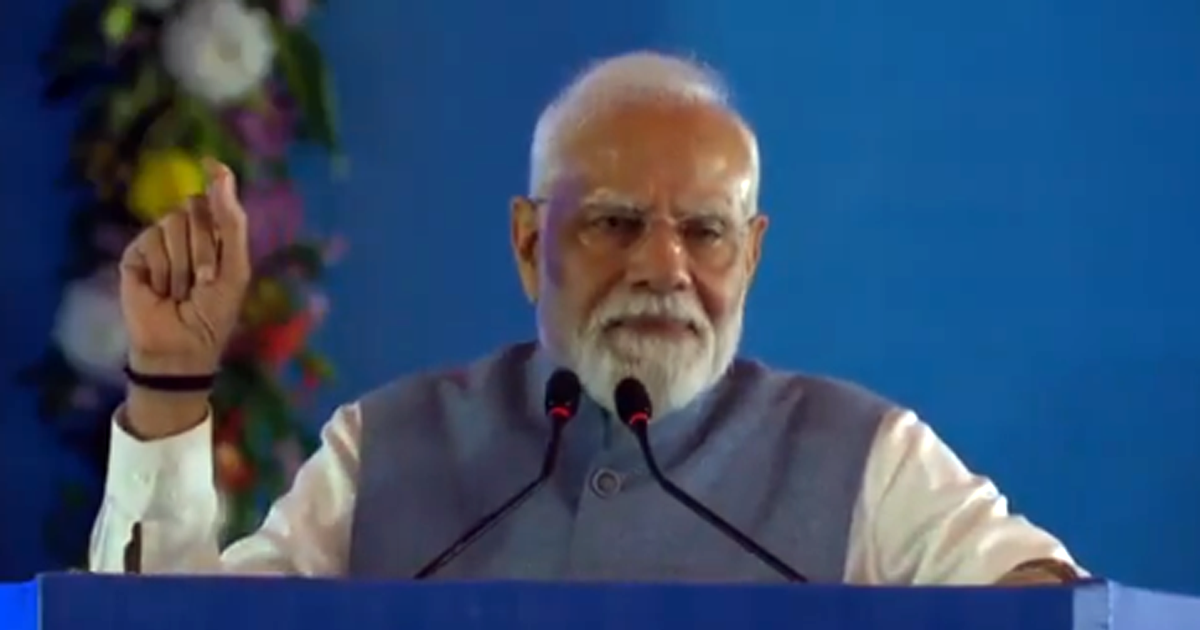
Addressing the fifth National Skill Convocation Ceremony at the Indira Gandhi Pratishthan in Lucknow on Saturday, Modi recalled his appeal made last year, urging citizens to avoid purchasing gold for one year unless there was a genuine necessity.
Expressing satisfaction over the public response, the Prime Minister said people had followed his advice and reduced their gold purchases.
“A year ago, I had urged my fellow citizens that if they don’t need it, please don’t buy gold for a year. And I’m happy that an ordinary person like me said it, and people bought less gold, and gold prices fell,” Modi said.
He further claimed that people were now telling him that following his advice had helped them save money as gold prices declined.
Drawing a Parallel with Lal Bahadur Shastri’s Appeal
To underline the spirit of public participation, Modi compared the response to his appeal with the nationwide response to former Prime Minister Lal Bahadur Shastri’s call during the 1965 food crisis to skip one meal a day to conserve food.
He said the country’s willingness to respond to a national appeal remained unchanged.
The Prime Minister observed that just as people had supported Shastri during a period of food scarcity, citizens had demonstrated a similar sense of national responsibility by reducing gold purchases.
🇮🇳Indian PM Modi – I urged all Indians to stop buying gold a year ago !!!
Today, gold prices have crashed, saving crores of rupees for Indian households! https://t.co/APuHFpYsh5
— Ajay Kashyap (@EverythingAjay) November 21, 2026
His appeal was part of a broader set of suggestions made to citizens in May 2026 amid economic concerns arising from the West Asia conflict, rising crude oil prices and pressure on India’s foreign exchange reserves.
Among other suggestions, he had urged people to conserve fuel, reduce unnecessary foreign travel, promote work from home wherever possible and prioritise domestically manufactured products.
Gold Imports Decline Nearly 40 Per Cent
Available figures indicate a significant contraction in India’s gold imports and domestic demand.
According to government data cited by NDTV, India’s gold imports declined by nearly 40 per cent during April-October 2026, falling to $24.78 billion from $41.24 billion during the corresponding period of the previous year.
The World Gold Council also reported a substantial decline in Indian gold demand during July-September. Demand fell to around 162 tonnes, approximately 29 per cent lower than the corresponding period a year earlier. Jewellery demand declined by around 20 per cent to nearly 100 tonnes.
Gold prices also witnessed a considerable correction. According to figures cited in media reports, the price of 24-carat gold in Delhi fell from approximately Rs 15,250 per gram on May 9 to Rs 12,523 per gram on November 21.
However, the decline in prices cannot be attributed exclusively to Modi’s appeal. International bullion market movements, changing investment demand, import-related policy measures and domestic market conditions also influence gold prices.
Appeal Amid Foreign Exchange Concerns
India is among the world’s largest consumers of gold and depends heavily on imports to meet domestic demand. Consequently, substantial gold imports contribute to foreign exchange outflows and can put pressure on the country’s trade balance.
The Prime Minister’s appeal was aimed at discouraging non-essential purchases and conserving foreign exchange at a time of heightened economic uncertainty.
Gold has traditionally occupied an important place in Indian households, particularly during weddings, festivals and other auspicious occasions. It is also widely regarded as a traditional store of wealth and a hedge against economic uncertainty.
Modi’s latest remarks indicate that the government views voluntary public participation as an important instrument in addressing broader economic challenges.
Modi Predicts Growing Demand for Skilled Workers
During the same programme, the Prime Minister also spoke about the changing employment landscape, emphasising the growing importance of practical skills over formal educational qualifications alone.
“Times are changing, and people with skills will be valued more than those who go around with paper certificates, wearing suits and ties,” he said, predicting increasing demand for skilled and talented workers.
He also referred to his earlier suggestion in 2023 that people invest in bonds issued by public sector undertakings, claiming that those who followed the advice had benefited.
The Lucknow address thus combined an appeal for economic prudence with a broader message about changing employment priorities and the importance of practical skills in India’s evolving economy.