
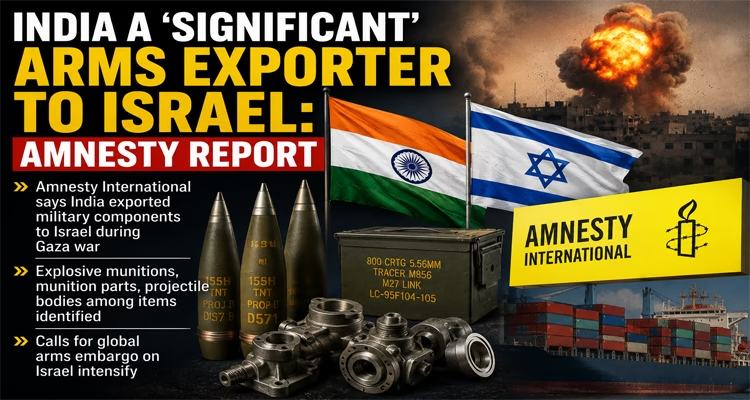
New Delhi: India has emerged as a “significant” exporter of military-related equipment to Israel, according to a new report by Amnesty International, which alleges that Indian-made defence components continued to reach Israeli arms manufacturers during the Gaza war. The rights group has renewed its demand for an immediate global arms embargo on Israel, arguing that continued military transfers risk contributing to serious violations of international humanitarian law.
The report marks a notable shift in India’s defence profile. Once known primarily as one of Israel’s largest arms buyers, India is now being identified as an increasingly important supplier of military components to the Israeli defence industry through its expanding domestic manufacturing base and joint ventures.
India’s Expanding Role Under Spotlight
Amnesty’s analysis, based on customs records, trade data and independent investigations, claims that Indian manufacturers exported a range of military-related components—including munition parts, explosive materials, projectile bodies and booster pellets—to Israeli defence firms after the Gaza conflict began in October 2023.
The organisation says these shipments illustrate India’s growing integration into Israel’s defence supply chain, driven by years of industrial collaboration under the “Make in India” programme and joint production agreements between Indian and Israeli companies.
India continues to supply arms to Israel despite a “substantial risk” of them being used in the “ongoing genocide against Palestinians” in Gaza, according to a report by Amnesty International.
🔗: https://t.co/aXjHG6aMko pic.twitter.com/93R31JWA2q
— Al Jazeera English (@AJEnglish) July 30, 2026
Amnesty Raises Legal Concerns
Amnesty International argues that governments have a legal obligation to halt arms transfers whenever there is a substantial risk that exported weapons or components could be used in violations of international humanitarian law.
“The continued supply of arms and military components to Israel must stop,” the organisation said, urging all states to suspend exports until the risk of misuse no longer exists.
The organisation maintains that states continuing such exports could face questions over their compliance with international legal obligations, particularly in light of proceedings before international judicial bodies concerning the Gaza conflict.
India continued supplying arms, ammunition, and military components to Israel despite the substantial risk they could be used in Israel’s ongoing genocide against Palestinians in the occupied Gaza Strip – new @Amnesty investigation.
Read our latest report:…
— Amnesty International (@amnesty) July 30, 2026
What the Report Claims
The report identifies India among 51 countries that allegedly supplied weapons or military-related equipment to Israel during the ongoing conflict. According to the investigation, explosive munitions constituted the largest category of Israel’s wartime military imports, accounting for more than 60 per cent of the recorded value of such imports.
Amnesty cites customs and shipping data suggesting that Indian-made components reached Israeli defence companies involved in manufacturing artillery shells and other munitions. However, the report does not claim that individual Indian shipments can be directly linked to specific military operations in Gaza.
India-Israel Defence Partnership Deepens
India and Israel have steadily strengthened defence cooperation over the past two decades. Israel remains one of India’s most important strategic defence partners, supplying advanced missiles, drones, surveillance systems, radars and electronic warfare equipment.
In recent years, the relationship has evolved beyond procurement, with increasing emphasis on joint manufacturing, technology transfer and defence production inside India.
New Delhi Yet to Respond
The Government of India has not publicly responded to Amnesty’s latest findings. India has consistently maintained its strategic partnership with Israel while simultaneously reiterating support for a negotiated two-state solution, humanitarian assistance to Gaza and the protection of civilians.
As international scrutiny over arms transfers to Israel grows, Amnesty’s report is expected to intensify debate over the responsibilities of countries involved in global defence supply chains amid one of the world’s most closely watched conflicts.




Highlighting recent geopolitical developments, this article explains how India is emerging as a significant exporter of military components to Israel, according to Amnesty International. It outlines concerns over legal and ethical implications, particularly regarding potential violations of international humanitarian law during the Gaza conflict.