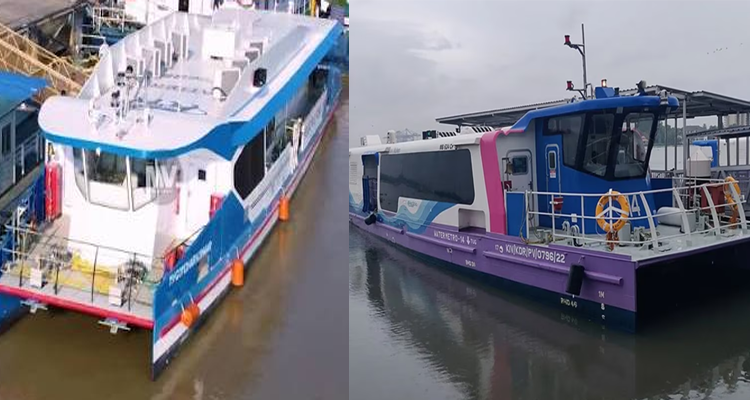
Patna: Patna is set for a major expansion of river-based transport and tourism infrastructure, with a Water Metro system estimated at around ₹1,200 crore being planned along the Ganga. The project is linked to National Waterway-1 (NW-1) and is aimed at developing modern passenger water transport, river tourism and supporting infrastructure in the city.
The Union Ministry of Ports, Shipping and Waterways has included Patna among the cities identified for Phase-I of the national Water Metro rollout. Feasibility studies for Patna have already been completed and accepted, while the Inland Waterways Authority of India (IWAI) has been working on the detailed planning of the city’s urban water transport system.
Kangan, Pehalwan Ghats to Get Major River Infrastructure
As part of the latest development, Kangan Ghat and Pehalwan Ghat have been identified for major river-cruise terminal infrastructure. The Bihar government has reportedly allocated two acres each at the two locations to IWAI for development of the proposed facilities.
The two terminals are estimated to cost around ₹200 crore, with construction targeted for completion before 2029, according to officials quoted in recent reports.
The facilities are expected to cater to river-cruise vessels carrying domestic as well as international tourists and could strengthen Patna’s position as a river-tourism destination on the Ganga.
Kangan Ghat Terminal to Have 150-Metre Pontoon
The proposed Kangan Ghat terminal will include berthing infrastructure connected to a pontoon in the Ganga. The pontoon is planned to be around 150 metres long and will be connected to the terminal through a gangway passing beneath the JP Ganga Path.
The planned arrangement would allow up to four vessels to berth simultaneously. A fuel-bunkering facility has also been proposed to support vessels using the terminal.
Elevated Terminal Planned at Pehalwan Ghat
At Pehalwan Ghat, the terminal infrastructure is planned on an elevated platform, with an elevated approach and ramp connecting the terminal to the river pontoon.
Stone pitching along the riverbank is also part of the proposed development. The elevated design is intended to accommodate the riverfront conditions while providing modern passenger and cruise facilities.
Beyond Tourism: Urban Water Transport Network
The broader Patna Water Metro plan goes beyond cruise tourism. IWAI’s 2025 consultancy document proposed preparing a detailed project report for an urban water transport system covering the Ganga and Gandak rivers.
The feasibility exercise identified several potential locations, including Chechar Ghat, Kangan Ghat, Gai Ghat, Gandhi Ghat, Digha Ghat, Fakkar Mahto Ghat, Nariyal Ghat, Panapur, Konhara Ghat and Kali Ghat in Sonpur.
The proposed network is intended to improve passenger movement through the city’s waterways and eventually provide an alternative mode of transport alongside road and rail connectivity.
Earlier ₹908-Crore Proposal and Larger ₹1,200-Crore Plan
The Patna Water Metro has evolved through different stages of planning. An earlier agreement between IWAI and the Bihar government was associated with a ₹908-crore project, while subsequent planning and DPR-related assessments have placed the broader proposed system at around ₹1,200 crore.
The Ministry’s draft national Water Metro scheme indicates that individual city projects could broadly require ₹800 crore to ₹1,300 crore, depending on their infrastructure and operational requirements.
Therefore, the ₹1,200-crore figure should currently be treated as an estimated project cost rather than a final sanctioned expenditure.
Boost to Ganga Tourism and Local Economy
The planned infrastructure could give a significant push to river tourism, passenger transport and the local waterfront economy. Modern terminals, cruise facilities, passenger jetties and supporting services are expected to create opportunities in tourism, vessel operations, hospitality, transport and other related sectors.
With Patna already witnessing development of road and riverfront infrastructure, the Water Metro initiative could add another dimension to the city’s transport network while bringing the Ganga further into the centre of its urban mobility and tourism plans.