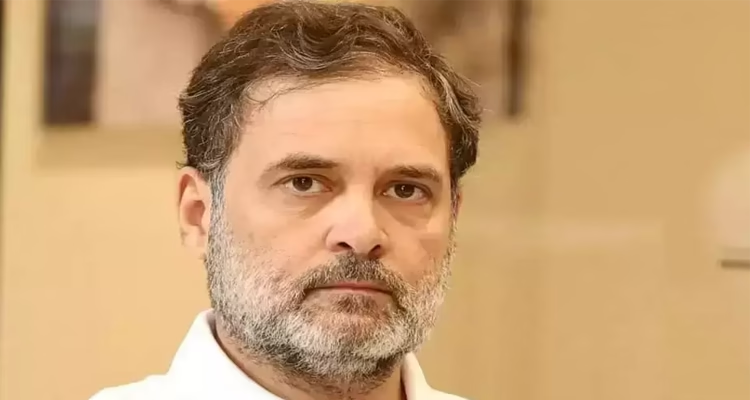
New Delhi: In a fresh attempt to connect directly with India’s younger generation, Leader of Opposition in the Lok Sabha Rahul Gandhi on Thursday launched an “Ask Me Anything” (AMA) initiative on Instagram, inviting students and Gen Z users to send him questions and raise issues concerning them.
Announcing the initiative through his social media account, Gandhi said he was there to listen to young people and would try to answer as many questions as possible. The interaction is being conducted through Instagram Stories, where users can submit questions using the platform’s question feature.
The move marks another step in Gandhi’s growing use of social media to directly engage students and young voters, particularly at a time when education, competitive examinations, paper leaks, employment and alleged police action against protesters have emerged as major political issues.
Direct Q&A with Gen-Z: No scripts, no filters, just real answers from @RahulGandhi Ji! pic.twitter.com/cqFsZ1JFRR
— Rannvijay Singh Lochav (@RannvijayLochav) August 6, 2026
Youth and Students Take Centre Stage
The AMA comes against the backdrop of recent student protests over alleged irregularities and paper leaks in competitive examinations. Gandhi has increasingly placed students’ grievances at the centre of his political messaging in recent weeks.
Just a day before launching the Instagram interaction, Gandhi met students who had participated in protests last month and had alleged police excesses during the July 20 agitation. The protesters had raised concerns over paper leaks and demanded accountability in the education system.
Earlier, Gandhi had publicly backed students protesting over examination-related issues, arguing that they were demanding an education system that was functional, affordable and fair. During the July protests, he said the Opposition had a responsibility to stand with young people when they took to the streets over their concerns.
‘Every Government Must Listen to Students’
One of the significant themes emerging from Gandhi’s interaction with young people has been the need for governments to listen to students irrespective of which political party is in power.
Responding to a question concerning students and the education system, Gandhi said governments — whether led by the Congress, the Centre or the Jharkhand government — should listen to students and act to improve the education system.
The remark assumes significance amid ongoing student protests in Jharkhand, where the Congress is a constituent of the JMM-led ruling alliance. By including Congress governments in his observation, Gandhi sought to frame the issue as one of institutional accountability rather than solely an attack on his political opponents.
From Street Protests to Digital Conversation
Gandhi’s latest initiative also signals an attempt to take the conversation with students beyond political rallies and press conferences and into a platform heavily used by younger audiences.
Through the AMA, students are expected to be able to raise questions relating to education, employment, governance and other issues directly with the Congress MP. His Instagram Story accompanying the initiative showed him interacting with young people before inviting questions from users.
Gandhi has also been regularly sharing clips and excerpts from his meetings with students and parents on Instagram, indicating a sustained strategy of building direct communication with young audiences rather than relying exclusively on traditional political platforms.
The outreach follows his interventions in controversies surrounding examination systems and student protests. In May, for instance, Gandhi met students amid the CBSE On-Screen Marking controversy and accused the government of failing to adequately address their concerns.
Gen Z Becomes New Political Battleground
The initiative comes at a time when Gen Z is rapidly emerging as an important constituency in India’s political communication landscape.
Political parties and senior leaders are increasingly turning to Instagram, reels, short-form videos and interactive formats to communicate with younger voters. Reports indicate that the BJP too has intensified its digital outreach following recent student agitations, with senior leaders being encouraged to increase their engagement on platforms popular among young people.
Gandhi’s AMA therefore goes beyond a conventional social-media exercise. It reflects a broader shift in political communication — from one-way speeches and statements towards more personalised and interactive digital engagement.
For Gandhi, who has repeatedly sought to foreground unemployment, examination irregularities, education costs and opportunities for young Indians, the Instagram interaction offers an opportunity to hear questions directly from a generation that is increasingly vocal online.
Whether the AMA remains a one-off interaction or develops into a regular channel of communication remains to be seen. But its timing makes the political message clear: India’s Gen Z is becoming an increasingly important audience, and Rahul Gandhi wants to be part of its conversation.