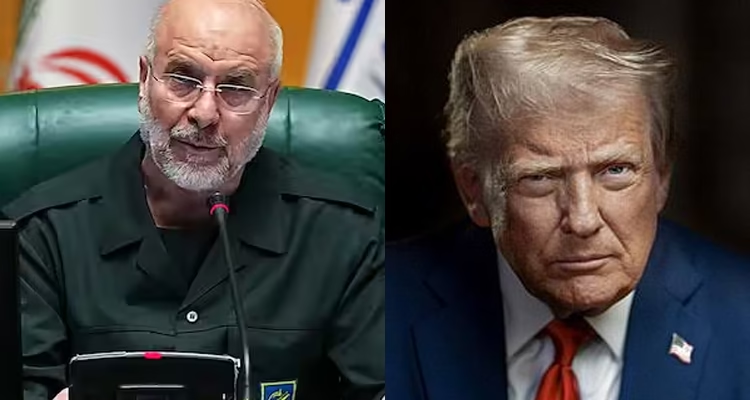
Tehran/Washington: Tensions between Iran and the United States have escalated sharply after U.S. President Donald Trump issued fresh warnings to Tehran over its support for regional allies and the ongoing crisis in Lebanon. In response, Iran’s chief negotiator and Parliament Speaker Mohammad Bagher Ghalibaf cautioned Washington against making threats, declaring that Iran’s armed forces are fully prepared to respond if provoked.
The latest exchange of warnings comes as high-level U.S.-Iran talks are underway in Switzerland, aimed at preserving a fragile diplomatic framework established earlier this month. The negotiations are taking place amid renewed violence in Lebanon and growing disputes over Iran’s nuclear program, sanctions relief, and the strategic Strait of Hormuz.
Trump THREATENS to WIPE OUT Iran if it closes Hormuz
‘YOU WON’T HAVE A COUNTRY’
Iran fires back: ‘Be careful… our armed forces READY’ pic.twitter.com/7giYUilkxA
— The Dominican post. 🇩🇴🇺🇸 (@rovinsonfranzua) June 21, 2026
Iran’s Warning to Washington
Speaking after Trump’s remarks, Ghalibaf urged the United States to exercise caution, warning that Iran would not remain passive in the face of military threats.
“Our armed forces are ready to respond in a different way,” he said, signaling Tehran’s willingness to retaliate if the U.S. takes hostile action. Iranian officials also accused Washington of undermining ongoing diplomatic efforts by resorting to intimidation and pressure tactics.
Iran’s delegation reportedly lodged a formal protest during the talks, arguing that Trump’s statements contradicted efforts to reduce regional tensions.
Trump’s Tough Message
Trump’s comments followed renewed clashes involving Iran-backed Hezbollah fighters and Israeli forces in Lebanon. The U.S. President warned Tehran that it must rein in its regional allies or face severe consequences.
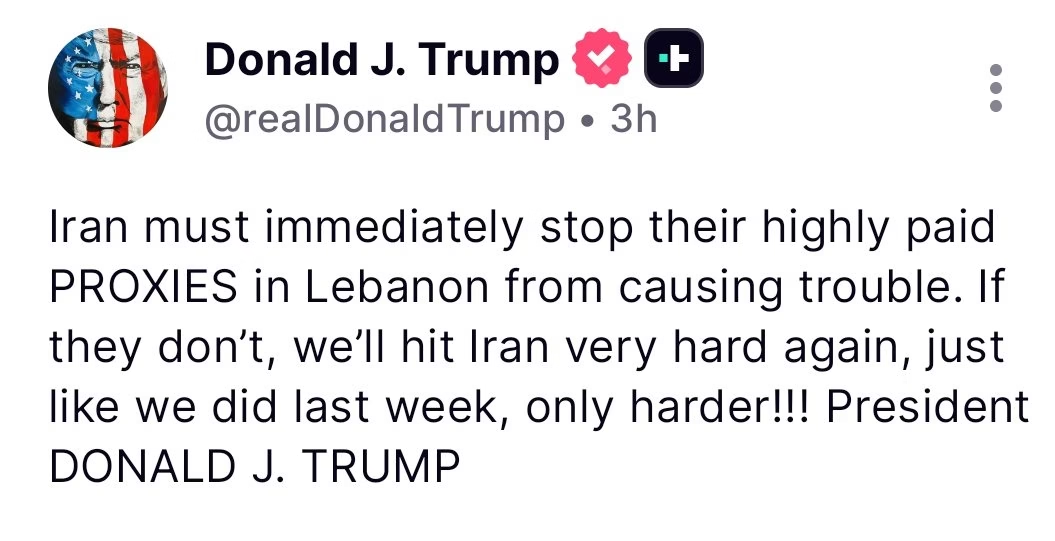
According to reports, Trump threatened fresh military strikes against Iran and issued strong warnings regarding Tehran’s actions in the Strait of Hormuz, a critical global oil transit route. He also suggested that the United States could take tougher measures if Iran continued what Washington describes as destabilizing activities in the region.
Switzerland Talks Under Pressure
The diplomatic confrontation has cast a shadow over ongoing negotiations in Switzerland, where representatives from both countries are attempting to salvage a broader understanding covering sanctions, maritime security, and nuclear issues. Pakistan and Qatar are among the countries helping facilitate the talks.
Reports indicate that discussions became strained after Trump’s remarks, with Iranian negotiators temporarily suspending participation and warning that continued threats could jeopardize the entire process.
Strait of Hormuz and Lebanon at the Center
The dispute is closely linked to the conflict in Lebanon, where Israeli military operations against Hezbollah have intensified. Iran has accused the U.S. of failing to restrain Israel, while Washington insists Tehran must curb support for armed groups across the region.
At the same time, disagreements over the Strait of Hormuz remain a major flashpoint. The waterway handles a significant portion of global oil shipments, and any disruption there could have major consequences for international energy markets.
What Happens Next?
Despite the heated rhetoric, negotiators from both sides have signaled that dialogue has not completely broken down. However, analysts warn that continued military threats and regional violence could derail the fragile diplomatic process.
With Iran insisting that its armed forces are ready to defend the country and Trump maintaining a hardline stance, the coming days are expected to be critical for both regional stability and the future of U.S.-Iran relations.