
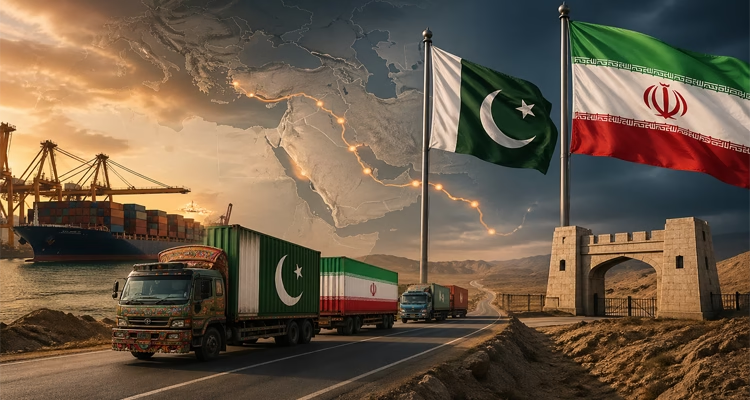
News Desk: In a move that could reshape regional logistics, Pakistan has rolled out multiple overland trade corridors connecting its key ports to Iran, offering an alternative to increasingly constrained maritime routes through the Strait of Hormuz.
Six Corridors Link Ports to Border Crossings
Under the newly notified Transit of Goods through Territory of Pakistan Order, 2026, Islamabad has operationalised six trade routes enabling third-country goods to reach Iran via Pakistani territory.
The corridors connect major ports—Gwadar Port, Karachi Port and Port Qasim—with border points such as Taftan border crossing and Gabd border crossing. These routes integrate coastal highways with inland transport networks under customs supervision.
Iran Become More Power-Full⚡
Pakistan opens 6 land corridors to Ir-an to bypass Hormuz disruptions, enabling transit of 3,000+ containers,” 🚛 pic.twitter.com/Z0KNOwjAwf
— World Affair’s (@AyatollahAraafi) April 30, 2026
Alternative to Hormuz Disruptions
The development comes amid heightened restrictions on shipping linked to Iran, with the US tightening controls around the Hormuz passage—a critical artery that handles a significant share of global oil trade.
With maritime movement facing uncertainty, thousands of containers destined for Iran had reportedly been stuck at Pakistani ports. The new land corridors now allow these consignments to move onward, ensuring continuity in trade flows.
Strategic Shift in Regional Trade
The timing is significant. Rising tensions between Washington and Tehran have placed renewed pressure on sea-based commerce, prompting regional players to explore alternative logistics frameworks.
Analysts say the land routes reduce dependence on vulnerable sea lanes while giving Iran a crucial fallback channel to sustain imports and exports.
Pakistan Positions Itself as Transit Hub
Islamabad has framed the initiative as part of its broader trade facilitation push, highlighting multimodal transport provisions and financial guarantees to ensure compliance with customs norms.
The move strengthens Pakistan’s role in regional connectivity, particularly as routes linked to the China-Pakistan Economic Corridor (CPEC) and West Asian trade gain traction.
Wider Geopolitical Impact
Experts note that the corridors introduce a new dynamic in the regional economic landscape, potentially softening the impact of maritime restrictions on Iran while enhancing Pakistan’s strategic leverage in cross-border trade.
As geopolitical tensions continue to reshape global supply chains, especially around chokepoints like the Strait of Hormuz, Pakistan’s land bridge to Iran could emerge as a key alternative in the evolving trade architecture.