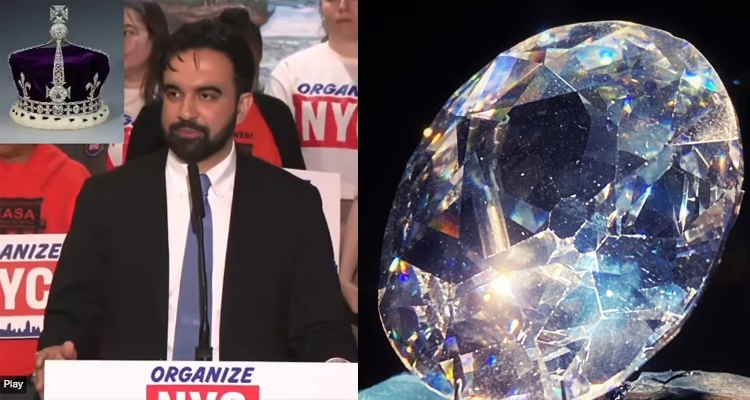
Zohran Mamdani: If I was to speak with King Charles separately from today’s event, I’d probably encourage him to return the Kohinoor Diamond
Bro really looks like he’s on a secret mission as an Indian spy agent pic.twitter.com/L3FbFgnYhF
— Surajit (@surajit_ghosh2) April 29, 2026
News Desk: New York City Mayor Zohran Mamdani has stirred fresh debate over colonial-era artefacts, saying he would urge King Charles III to return the historic Kohinoor diamond to India if given the opportunity to meet him.
In remarks shared during a media interaction that quickly went viral, Mamdani said he would not extend any special “royal treatment” to the British monarch and would instead raise the long-standing demand for restitution. “If I were to speak to the King separately, I’d probably encourage him to return the Kohinoor diamond,” he said, triggering reactions across political and diplomatic circles.
THE BRITISH ARE COMING: Mayor Zohran Mamdani makes it clear he won’t be giving King Charles the ‘Royal Treatment’ in NYC.
When asked about what he’d say to the King if he stops to chat during his visit, Mamdani says he’d ask him to return the “Koohinor Diamond.”
The diamond is… pic.twitter.com/3ltbtrU99Q
— FOX & Friends (@foxandfriends) April 29, 2026
A Symbol of Colonial Contestation
The Kohinoor diamond—whose name translates to “Mountain of Light”—remains one of the most contentious symbols of colonial-era acquisition. Once weighing around 186 carats in its original form, the diamond was later recut and now stands at approximately 105.6 carats.
Currently housed in the Tower of London as part of the British Crown Jewels, the Kohinoor has been on public display for decades. It was most recently set in the crown worn by Queen Elizabeth, further cementing its association with the British monarchy.
From Mughal Courts to British Crown
Historically, the diamond changed hands across empires—originating in India, passing through the Mughal Empire, and later controlled by Persian and Afghan rulers before being acquired by Sikh ruler Maharaja Ranjit Singh in 1813.
Following the annexation of Punjab by the British East India Company in 1849, the diamond was ceded to the British Crown under the Treaty of Lahore, signed by the young Maharaja Duleep Singh.
Renewed Calls for Repatriation
India has, for decades, maintained that the Kohinoor is an integral part of its cultural heritage and should be returned. The issue periodically resurfaces in diplomatic and public discourse, often tied to broader debates on restitution of artefacts taken during colonial rule.
Mamdani’s remarks have now added a fresh political voice to that conversation, potentially reigniting global attention on one of history’s most disputed jewels.